What to Do if Your Child Has a Dental Emergency
If your child has a dental emergency, the first goal is not to fix everything at home. It is to stay calm, control bleeding, protect the injured area, and figure out whether you need a same-day dentist, an emergency room, or simple watchful care until the office opens.
TL;DR: The right response depends on the injury. A knocked-out permanent tooth is time-sensitive. A knocked-out baby tooth should not be replanted. Swelling, uncontrolled bleeding, trouble breathing, or head injury symptoms need urgent medical care.
Start with these first steps
When something happens fast, use this order:
1. Check for head injury, trouble breathing, or major bleeding first.
2. Rinse the mouth gently with water if your child will tolerate it.
3. Use clean gauze or a cloth to apply pressure if there is bleeding.
4. Find any broken tooth piece or the whole tooth, but handle it carefully.
5. Call your dentist and describe exactly what happened and when.
If your child lost consciousness, is vomiting after the injury, seems confused, has severe facial swelling, or has trouble breathing or swallowing, go to urgent medical care immediately.
The most common emergencies and what to do
Knocked-out permanent tooth
A knocked-out permanent tooth is one of the most time-sensitive dental injuries. The International Association of Dental Traumatology guidance hosted by AAPD recommends handling the tooth by the crown, not the root. If it is dirty, rinse it gently in milk, saline, or saliva. If you have been instructed and it is safe to do so, immediate replantation can be helpful for a permanent tooth. If not, store it in milk or saline and get urgent dental care right away.
Knocked-out baby tooth
Do not try to replant a primary tooth. Replanting can injure the developing adult tooth underneath. Call a dentist for advice and an exam.
Chipped or broken tooth
Rinse gently, save any fragment, and use a cold compress for swelling. Even a small fracture should be assessed because the tooth may be more damaged than it looks.
Tooth pushed out of position
If a tooth looks longer, shorter, twisted, or loose after an injury, it needs prompt dental evaluation. Do not force it back unless you are specifically instructed by a professional.
Toothache with swelling
Pain plus swelling may suggest infection or trauma-related damage. If swelling is spreading, the child has fever, or the face looks puffy, do not wait.
Bitten lip, tongue, or cheek
Apply gentle pressure with clean gauze. Small soft-tissue injuries often stop bleeding with pressure and cold. Deep cuts, gaping wounds, or bleeding that does not stop may need urgent medical attention.
Warning Signs for if Child Has Dental Emergency
If What to Do if Your Child Has a Dental Emergency becomes more painful, swollen, unstable, or difficult to clean, stop experimenting and request professional guidance when home-care instructions are prepared. Common mistakes involving What to Do if Your Child Has a Dental Emergency include aggressive home fixes, unverified products, and delays that allow symptoms or fit problems to worsen.
- do not scrub a knocked-out permanent tooth
- do not touch the root if you can avoid it
- do not replant a baby tooth
- do not put aspirin directly on the gums
- do not wait overnight with swelling that is worsening quickly
- do not assume a baby tooth injury is minor just because the tooth will “fall out anyway”
Injuries to primary teeth can still affect comfort, eating, infection risk, and even the developing permanent tooth.
Home care while you are waiting to be seen
If your child is stable and the dentist has advised home care until the visit:
- offer soft foods
- avoid using the injured area for chewing
- use a cold compress on the face for swelling
- keep the mouth as clean as possible with gentle rinsing
- use only the pain medicine and dose appropriate for your child, following your clinician’s advice or the label instructions
Warning Signs for if Child Has Dental Emergency During Planning
Watchful care may be reasonable for a very minor lip bite, a tiny chip with no pain, or brief discomfort that is clearly improving. A dentist should take over when there is:
- a loose or displaced tooth
- a broken tooth with sensitivity or sharp edges
- ongoing bleeding
- swelling
- pain that interferes with sleep, eating, or normal activity
- any question about whether the tooth is baby or permanent
This is one reason the first preventive visit matters. Families who already know their pediatric dental office often move faster and with less confusion during injuries, which ties back to why the first dental visit should happen by age one.
A quick guide by injury type
| Situation | Likely urgency | What to do now |
|---|---|---|
| Knocked-out permanent tooth | Immediate | Store properly and seek urgent dental care |
| Knocked-out baby tooth | Same day call | Do not replant; get instructions |
| Minor chip, no pain | Soon | Save fragment and arrange exam |
| Swelling or fever | Urgent | Contact dentist promptly; seek medical care if severe |
| Cut lip with uncontrolled bleeding | Immediate | Pressure and urgent medical care |
| Tooth suddenly darkens after trauma | Prompt appointment | Schedule dental follow-up |
How emergencies change later planning
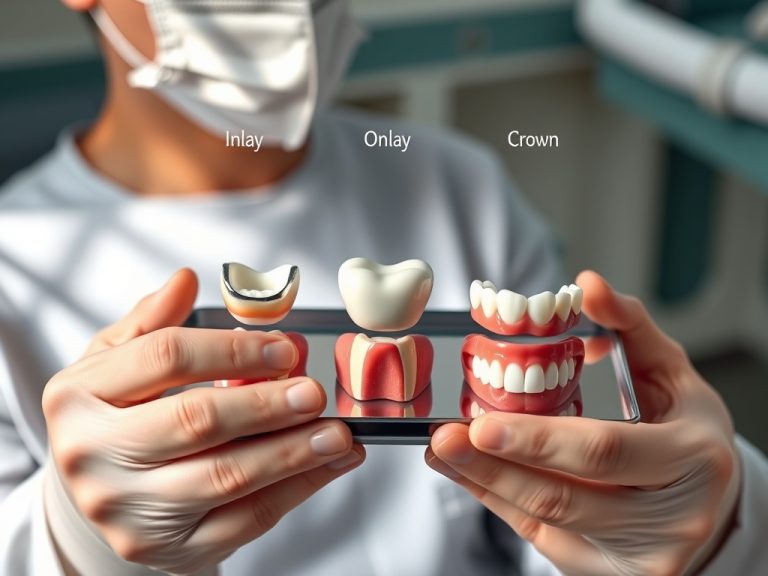
Even when the pain settles, dental trauma can change what comes next. A child may need X-rays, follow-up checks, nerve monitoring, or restorative work later. In older children and teens, the conversation may eventually overlap with how damaged teeth are rebuilt, including choices discussed in inlay vs onlay vs crown: which repair is right for the tooth.
For teenagers, the picture can also get more complicated when wisdom teeth, orthodontics, or sports-related injuries are involved. That is one reason parents often benefit from reading ahead on what parents should know before a teen’s wisdom teeth surgery, even if the current issue is unrelated.
What to have ready at home
A simple dental first-aid setup can help:
- clean gauze
- a small container with a lid
- saline if available
- your dentist’s number
- a cold pack
- your child’s weight for accurate medicine dosing if needed
The best next move when you are unsure
If you are not sure whether the injury is minor or major, call a dentist and explain the age of the child, whether the tooth is baby or permanent, what the tooth looks like, whether there is bleeding or swelling, and how long ago the injury happened. Fast, accurate details are often what turns panic into a workable plan.
Warning Signs for if Child Has Dental Emergency Before Treatment
For if Child Has Dental Emergency, this part of Warning Signs for if Child Has Dental Emergency Before Treatment focuses on stable symptoms versus swelling, fever, trauma, bleeding, drainage, or loss of function before the final recommendation is accepted, with the same details verified before treatment is scheduled. The clinician should also explain how quickly the condition is changing and whether delay could increase risk for if Child Has Dental Emergency when home-care instructions are prepared, using the examination and health history rather than a general assumption.
Mistakes to Avoid With if Child Has Dental Emergency
For if Child Has Dental Emergency, the section on Mistakes to Avoid With if Child Has Dental Emergency should address harsh home remedies, repeated temporary fixes, and delays that hide progression when the follow-up plan is written, with those details checked again while the options are being narrowed. The clinician should explain which action could worsen pain, swelling, bleeding, fit, or tissue damage for if Child Has Dental Emergency while cost and timing are compared, connecting the recommendation to the examination and health history.