Guided Implant Surgery vs Freehand Placement: What Changes for Patients?
For patients, the biggest difference between guided implant surgery and freehand placement is not usually what it looks like in the chair. It is how the implant position is planned and transferred into the mouth. Guided surgery uses digital planning and a surgical guide to help control position, while freehand placement relies more directly on the clinician’s judgment during the procedure.
TL;DR: Guided implant surgery can improve planning precision and help in selected complex cases, but it is not automatically better for every patient. The best approach depends on anatomy, bone, restoration goals, the surgeon’s experience, and whether the extra digital workflow meaningfully changes the plan.
How the two approaches work
Freehand placement
In freehand implant surgery, the clinician plans the case using scans, X-rays, models, and restorative goals, but places the implant without a printed surgical guide directing the drill path. This does not mean the surgery is unplanned. It means the final execution is guided by the clinician’s skill and intraoperative judgment.
Guided placement
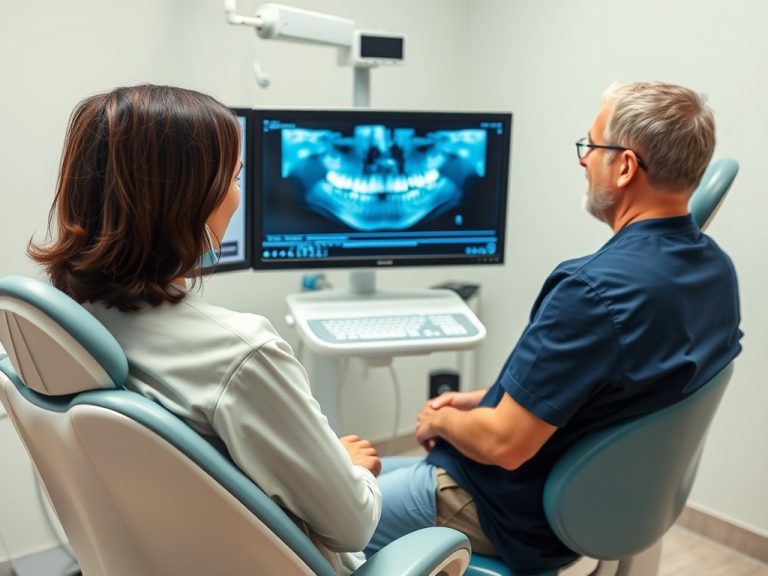
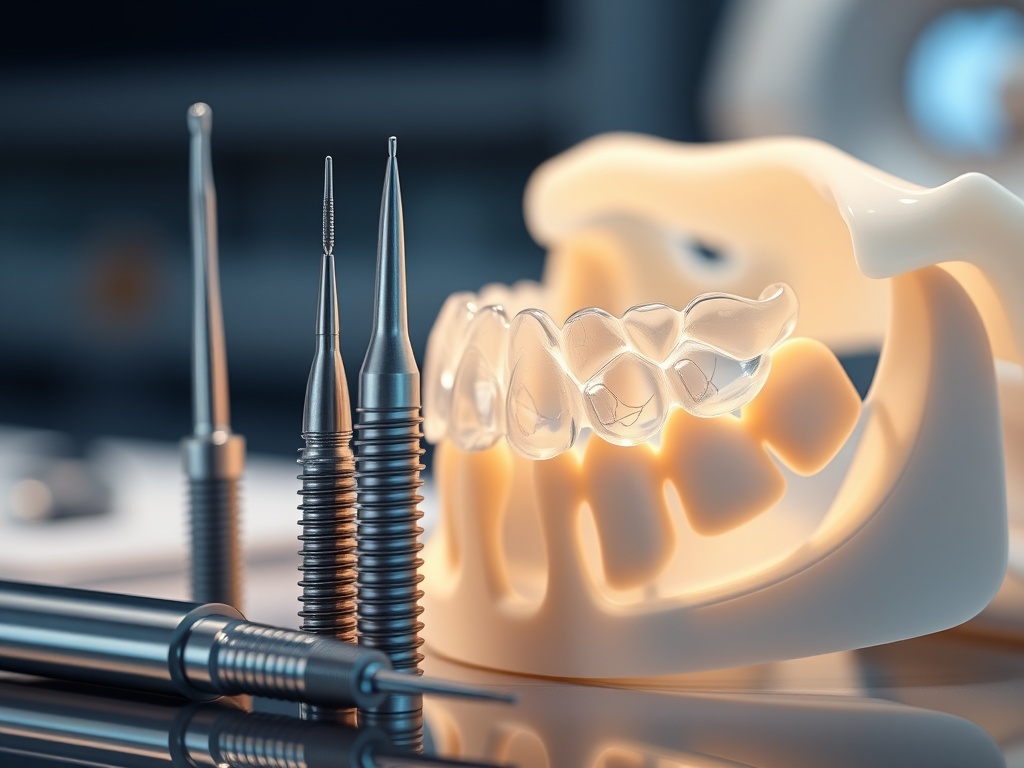
Guided surgery starts with digital planning, often using CBCT imaging and restorative information to design where the implant should ideally go. A surgical guide is then fabricated to transfer that plan into the mouth. Some systems are fully guided, while others only guide parts of the process.
A recent systematic review and meta-analysis found that computer-aided implant surgery showed better positional accuracy than freehand approaches overall. For patients, that matters most when accuracy affects safety margins, prosthetic design, or anatomical constraints.
What patients may notice as different
The planning phase may be more involved
Guided cases often require additional digital records, such as CBCT imaging, scans, or guide fabrication steps. Patients may notice more pre-op planning even though the actual surgery day feels similar.
The surgery may feel more structured
With a guide in place, the procedure can feel methodical and tightly sequenced. In some cases that may support flapless or minimally invasive approaches, though that depends on the case rather than the word “guided” alone.
The cost may differ
Some guided workflows add cost because of imaging, software, laboratory, or guide production steps. Patients should ask what those added steps are changing in their case, not just whether the office “offers guided implants.”
Planning Notes for Guided Implant Surgery vs Freehand Placement
Guided surgery can be especially useful when:
- space is limited
- the implant position is prosthetically demanding
- nearby anatomical structures require careful planning
- multiple implants need coordination
- the restorative plan depends on very specific angulation
In these cases, the guide is not just a convenience. It may change how predictable the plan is.
Planning Notes for Guided Implant Surgery vs Freehand Placement During Planning
Freehand placement may still be appropriate when:
- the anatomy is favorable
- the surgeon has strong experience in similar cases
- guide access is limited
- the case is straightforward enough that a guide would not meaningfully change safety or outcome
The important point for patients is that freehand does not mean careless, and guided does not mean perfect. Both methods depend on planning, case selection, and operator judgment.
Questions patients should ask before choosing
A good consult usually includes questions like:
1. Why are you recommending guided or freehand placement in my case?
2. What problem does the guide solve here?
3. Will this affect how invasive the procedure is?
4. Will it change healing, comfort, or the final restoration?
5. What imaging and records are required?
These answers should be specific. “It is more advanced” is not enough on its own.
What changes for comfort, healing, and maintenance?
Patients often expect a simple better-versus-worse answer here, but the truth is more conditional. Guided placement may support a more efficient or less invasive plan in some cases. In others, healing depends much more on bone quality, gum condition, smoking status, oral hygiene, and surgical complexity than on whether the implant was guided.
Maintenance after implant placement still matters either way. The long-term success of an implant depends on cleaning access, bite forces, tissue health, and regular professional follow-up, not just the way the implant was placed on day one.
How this fits with replacing a missing tooth
The choice between guided and freehand does not come first. First comes the bigger decision about whether an implant is the right replacement method at all. If you are still at that stage, what happens if you don’t replace a missing tooth is the better place to start.
Likewise, patients sometimes assume a guided implant can solve every restorative challenge. It cannot compensate for untreated gum disease, poor home care, or a bite that has already become unstable.
A comparison patients can use in consults
| Question | Guided surgery | Freehand placement |
|---|---|---|
| How is position transferred? | Through a planned surgical guide | Through clinician technique and intraoperative judgment |
| Extra records needed? | Often yes | Sometimes fewer |
| Best known advantage | More controlled transfer of digital plan | Flexibility during surgery |
| Best use cases | Constrained or prosthetically demanding cases | Straightforward cases in experienced hands |
Routine consult or second opinion?
A routine implant consult is enough for many patients. A second opinion may help when:
- you are being told guided surgery is essential but no clear reason is given
- the case is close to important anatomical structures
- you are comparing major cost differences
- the treatment plan includes multiple implants or complex reconstruction
Questions About Guided Implant Surgery vs Freehand Placement
For Guided Implant Surgery vs Freehand Placement, this part of Questions About Guided Implant Surgery vs Freehand Placement focuses on the symptom history, previous treatment, current medicines, and the result the patient values most when maintenance is discussed, with the same details verified when maintenance is discussed. The clinician should also explain which examination finding supports each recommendation and what information could change it for Guided Implant Surgery vs Freehand Placement during the initial review, using the examination and health history rather than a general assumption.
Next Steps for Guided Implant Surgery vs Freehand Placement
For Guided Implant Surgery vs Freehand Placement, this part of Next Steps for Guided Implant Surgery vs Freehand Placement focuses on one clear action, a follow-up date, and reasons to contact the office sooner while comfort and function are assessed, with the same details verified when maintenance is discussed. The clinician should also explain what can be decided now and what depends on further evidence for Guided Implant Surgery vs Freehand Placement while recovery expectations are clarified, using the examination and health history rather than a general assumption.
Next Steps for Guided Implant Surgery vs Freehand Placement During Planning
For Guided Implant Surgery vs Freehand Placement, the section on Next Steps for Guided Implant Surgery vs Freehand Placement During should address one clear action, a follow-up date, and reasons to contact the office sooner before the final recommendation is accepted, with those details checked again during the initial review. The clinician should explain what can be decided now and what depends on further evidence for Guided Implant Surgery vs Freehand Placement when home-care instructions are prepared, connecting the recommendation to the examination and health history. A written summary helps the patient compare the next step for Guided Implant Surgery vs Freehand Placement before the final recommendation is accepted, especially when follow-up responsibilities are confirmed during the initial review.
Key Takeaways for Guided Implant Surgery vs Freehand Placement
For Guided Implant Surgery vs Freehand Placement, the section on Key Takeaways for Guided Implant Surgery vs Freehand Placement should address the diagnosis, patient goal, treatment limits, and maintenance burden during the initial review, with those details checked again while the options are being narrowed.