Chess calculation improves when you practice candidate moves, forcing lines, and evaluation in a repeatable way. Pattern recognition improves when you review recurring tactical and strategic themes until they become familiar under time pressure.
Key takeaway: Do not solve random puzzles only for speed. Use a routine: identify candidate moves, calculate forcing replies, write a short evaluation, compare with the solution, and review missed patterns later. This builds both accuracy and memory.
Why Calculation and Pattern Memory Work Together
Calculation is the skill of looking ahead. Pattern recognition is the skill of noticing familiar shapes quickly: pins, forks, mating nets, weak back ranks, overloaded defenders, pawn breaks, and common endgame structures. Players often separate these skills, but real games blend them. A pattern tells you where to look; calculation checks whether the idea actually works.
The official FIDE Laws of Chess define how the game is played, but improvement comes from training your decision process. An intermediate player usually does not lose because they know no tactics. They lose because they see a theme too late, stop calculating too early, or trust the first attractive move.
Build a Repeatable Drill Loop
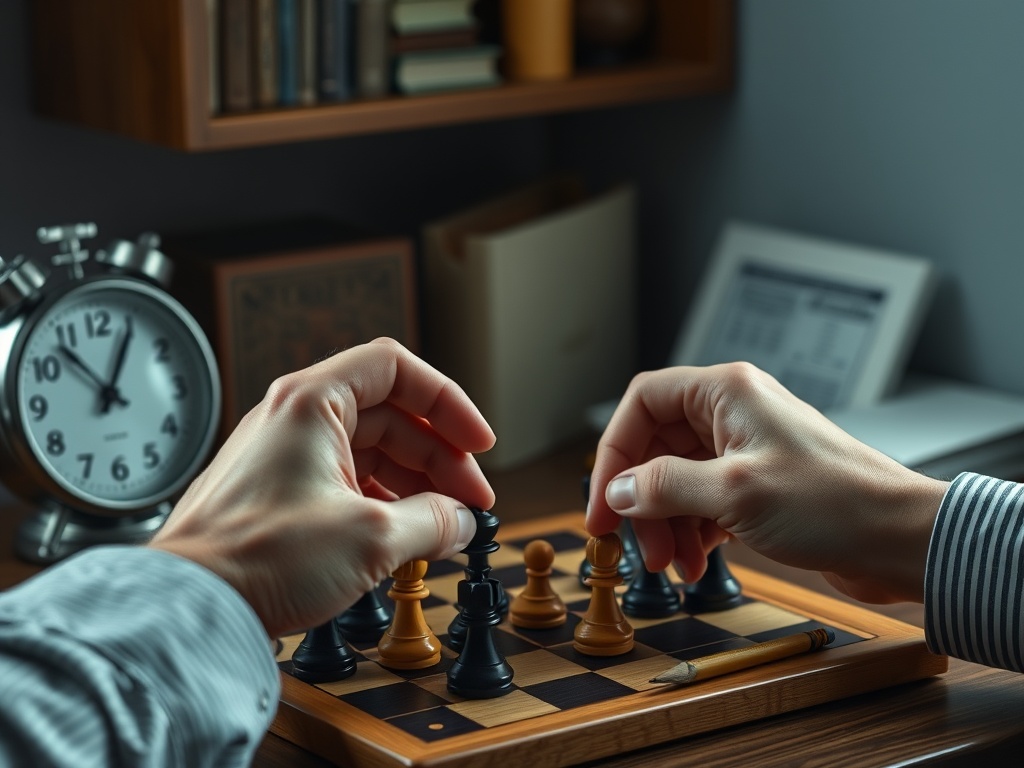
Start with positions that are challenging but not impossible. Set a board or digital board, hide the solution, and give yourself five to eight minutes. First list two or three candidate moves. Then identify forcing replies: checks, captures, threats, and defensive resources. Write the line you think works. Do not move pieces while calculating unless the drill is specifically designed for board visualization.
After choosing a move, compare your line with the answer and mark the error type. Was the missed move a tactical pattern, a visualization problem, a poor candidate list, or a bad final evaluation? This simple review turns puzzle solving into training. It also connects well with broader practice planning for sports skills because both require feedback, not just repetition.
Use Themes Instead of Endless Random Puzzles
Random puzzles are useful for testing, but themed sets are better for learning. Spend a week on pins and discovered attacks, then a week on back-rank ideas, then a week on deflection and overloading. When a theme repeats, your brain starts to recognize the board geometry faster.
A strong weekly plan might include three short tactical sessions, one slow calculation session, one annotated master-game review, and one review of your own games. The master-game review should be active. Before each major move, pause and ask what threats exist, which pieces are misplaced, and what pawn breaks are possible.
Train the Candidate-Move Habit
Many club players calculate one move deeply and ignore better options. A candidate-move habit prevents that. In quiet positions, candidates may include improving the worst piece, changing the pawn structure, trading a dangerous attacker, or creating a long-term target. In tactical positions, candidates usually start with checks, captures, and direct threats.
Use a short verbal checklist: forcing moves first, opponent threats second, quiet improvements third. This does not guarantee the best move, but it reduces impulsive choices. It also helps when you face time pressure because the process is already familiar.
Measure Progress Without Fooling Yourself
Puzzle rating alone can mislead because online puzzle pools reward pattern speed. Track three better measures: how often your candidate move appears in the top solution, how often you correctly identify the opponent’s strongest defense, and how often your final evaluation matches the engine or annotation.
Review ten missed positions every week. Sort them into themes. If most mistakes are visualization errors, practice short blindfold lines or coordinates. If most mistakes are missed defensive resources, force yourself to calculate the opponent’s best reply before celebrating a tactic. If most mistakes are strategic, study model games rather than harder tactics.
Mistakes That Slow Improvement
The first mistake is moving too fast during training. Speed is a result, not the starting goal. The second is checking the engine immediately. Engines are excellent for verification, but they can stop you from explaining your own thinking. The third is treating every missed puzzle as a lack of talent. Most misses have a practical cause that can be trained.
The most useful question after an error is: “What did I fail to notice?” That could be an undefended piece, a vulnerable king, a pawn promotion square, or a quiet defensive move. Over time, the answer becomes a personalized study list.
A Smarter Practice Finish
Close each session by writing one sentence: “Today I missed…” or “Today I recognized…” This creates a memory trail and keeps training specific. If you also play physical sports, you can use the same reflection style for decision making, fatigue, and safety cues such as recognizing heat illness early.
For your next session, choose one theme and one game of your own. Train slowly, explain your choices, and review the miss. Chess improvement comes from better thinking habits repeated often enough to appear in real games.
A Weekly Review Format That Sticks
Use a simple review page at the end of each week. Divide it into four lines: best pattern recognized, most common calculation error, one position to replay, and one training goal for the next week. This keeps study from becoming a blur of puzzles. It also stops the common habit of solving for entertainment while calling it training.
For deeper work, replay one missed position from memory before checking the board. Say the candidate moves aloud, describe the opponent’s resources, and state the evaluation after the line ends. This trains attention under pressure. The goal is not to become engine-like. The goal is to become more consistent about seeing forcing moves, respecting defensive ideas, and converting familiar patterns into decisions during real games.