Most golfers are better served by a GPS watch if they want quick front-middle-back yardages and simple course navigation. A laser rangefinder is better for players who want exact flag distances and are comfortable aiming the device before shots.
Key takeaway: Choose a GPS watch for speed, convenience, and casual rounds. Choose a rangefinder for precise target measurement. Competitive players should always check event rules because committees can restrict distance-measuring devices or certain features.
The Decision Comes Down to How You Play
Golf rangefinders and GPS watches solve the same basic problem: distance. The difference is how they deliver it. A rangefinder measures the distance to a visible target, usually the flag, bunker lip, tree, or carry point. A GPS watch uses course mapping to show distances to greens and hazards without requiring you to aim at a target.
Under the Rules of Golf, distance-measuring devices are generally allowed unless a competition committee adopts a local rule prohibiting them, and certain features such as measuring elevation changes for play can be restricted. The R&A distance-measuring device guidance is a useful reference before competitive rounds.
Where a Rangefinder Wins
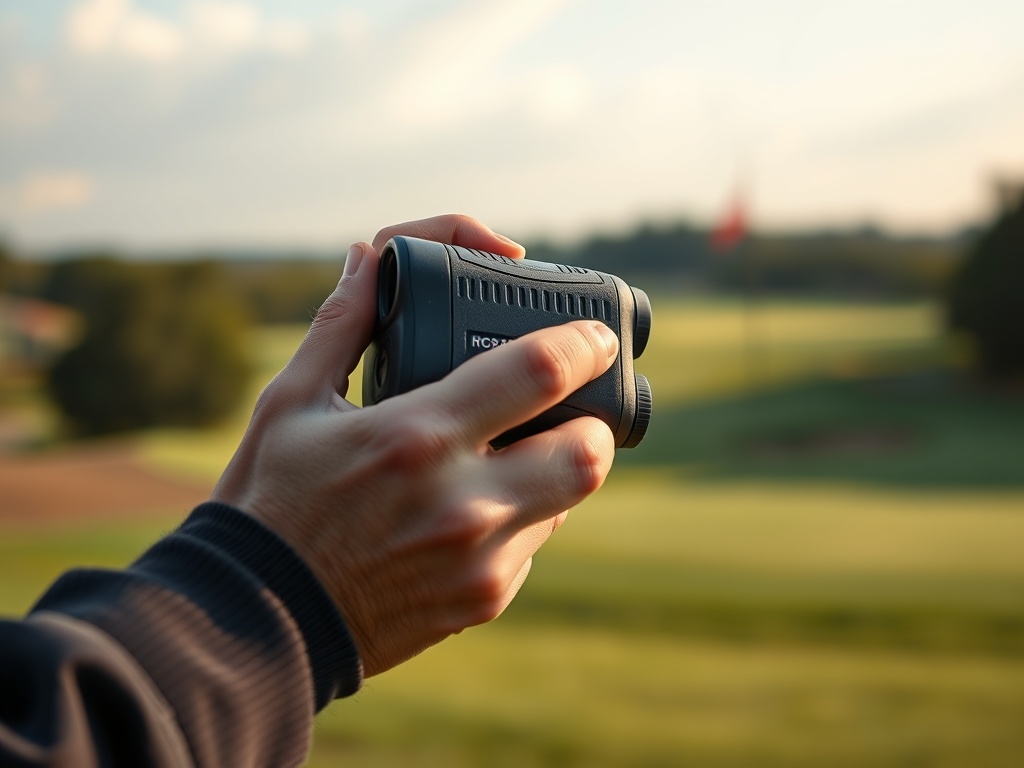
A rangefinder is strongest when you can see the target and need precision. If the pin is tucked near a ridge or the green is deep, a middle-of-green number may not be enough. The laser gives a direct reading to the flag or another visible object. Many players also like rangefinders for approach shots, par-3 tee shots, and practice sessions where they want to confirm exact distances.
The trade-off is friction. You have to pull it out, aim steadily, lock onto the right target, and avoid accidentally measuring trees behind the green. In wind, rain, shaky hands, or blind shots, this can slow play or reduce confidence.
Where a GPS Watch Wins
A GPS watch is strongest for speed. Look at your wrist, get front-middle-back yardages, and make a club decision. It is especially useful for golfers who walk, play unfamiliar courses, or want hazard information without searching for sprinkler heads or cart screens.
The trade-off is that GPS numbers are mapped estimates, not a direct laser reading to the flag. For many mid-handicap and casual players, that is fine because aiming at the center of the green is often smarter than chasing every pin. For players dialing wedge distances tightly, the lack of exact flag measurement may feel limiting.
Side-by-Side Buying Comparison
| Feature | Rangefinder | GPS watch |
|---|---|---|
| Best for | Exact visible target distances | Fast yardages and course overview |
| Speed | Slower before each shot | Very fast glance-based use |
| Blind shots | Limited | Better if course map is accurate |
| Practice value | Strong for measuring targets | Strong for tracking round patterns |
| Learning curve | Requires steady aiming | Requires setup and charging |
| Common issue | Measuring the wrong object | Trusting mapped numbers without context |
This is also why equipment decisions should match the player’s actual habits. A golfer who wants fewer decisions may benefit from the watch. A golfer who already has a consistent pre-shot routine may enjoy the precision of a rangefinder.
Budget, Battery, and Upgrade Timing
A budget rangefinder can be useful if it locks targets reliably and has clear optics. Premium models may add better stabilization, faster readings, stronger weather resistance, or slope features that must be turned off when not allowed. GPS watches vary by course database, battery life, screen clarity, shot tracking, phone integration, and subscription requirements.
Do not upgrade because another player has newer tech. Upgrade when the current tool slows play, gives unreliable numbers, or no longer fits your goals. If you are still learning basic course management, a simple GPS watch and a conservative target strategy may lower stress more than a premium laser.
How to Pick Without Overbuying
Choose a rangefinder if you often ask, “How far exactly to that flag or carry point?” Choose a GPS watch if you often ask, “What is the safe number quickly?” Some golfers use both: watch for planning, laser for scoring shots.
If you are comparing tools as part of a broader sports-equipment decision, the same practical filter applies to other categories. Consider usefulness, rules, reliability, and learning curve, not just features. That approach also helps when reviewing sports apps for live events or broader differences between amateur and professional sport expectations.
The Most Sensible Choice for Most Players
For most recreational golfers, the GPS watch is the easier first tool because it speeds up decisions and encourages center-green thinking. For players who practice wedge control, play tournaments, or want exact target numbers, a rangefinder is often worth it.
Before buying, borrow each tool for one round if possible. The best device is the one you will use calmly, legally, and consistently during the round.
On-Course Test Before You Buy
Before buying, run a simple two-round test. In one round, use only front-middle-back numbers and aim for conservative targets. In another, use precise flag or carry numbers when available. After each round, note pace, confidence, club selection, and how many times the information changed the shot. This reveals whether precision actually helps your scoring or only feels more advanced.
Also test your pre-shot routine. A device should fit into the routine without adding tension. If a rangefinder makes you second-guess every wedge, it may not be the best first tool. If a watch makes you ignore obvious trouble or wind, it can also mislead. Technology supports judgment; it should not replace it.