
The best drawer organizers are not one universal product. They are organizers that fit the drawer precisely, match the items stored inside, stay stable during use, and tolerate the cleaning or humidity level of the room. For kitchens and bathrooms, modular plastic bins, expandable trays, spring-loaded dividers, peg systems, and purpose-built inserts each solve different problems.
TL;DR: Measure width, depth, and usable height before shopping. Choose easy-clean plastic or coated organizers for spill-prone and humid drawers, expandable bamboo or wood for dry drawers where appearance matters, modular bins for mixed small items, and dedicated knife or tool inserts for objects that need separation and protection.
Measure Before Comparing Materials
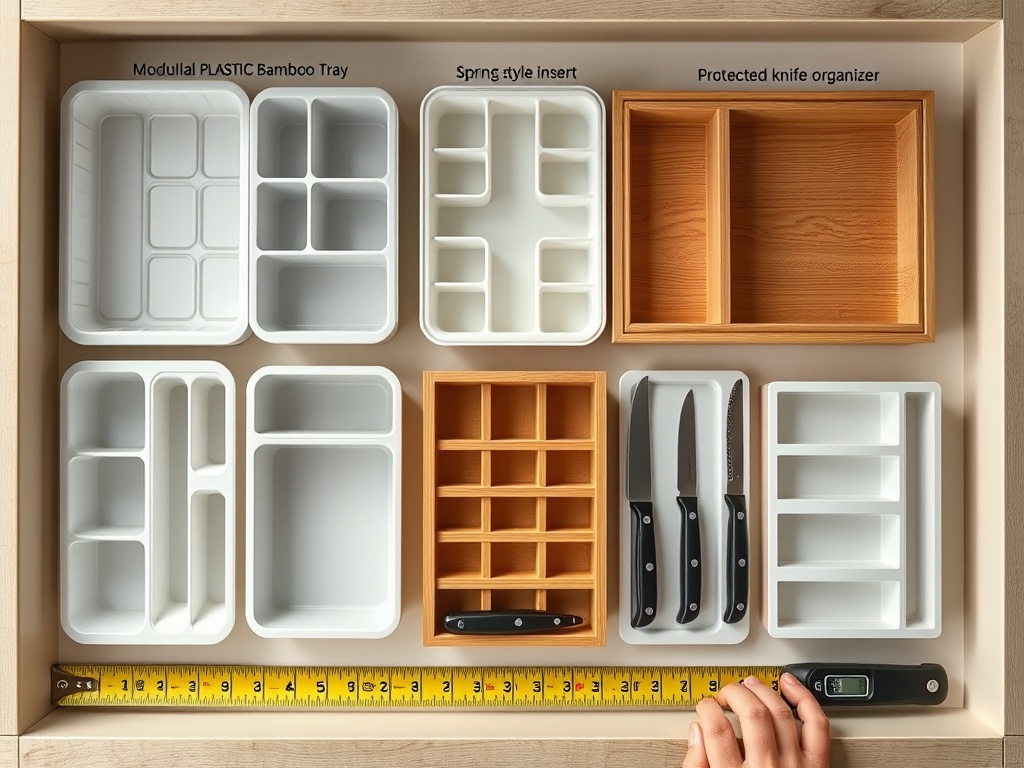
Product-aware shoppers often focus on material or appearance first, but dimensions decide whether an organizer will actually work. Measure the inside width, front-to-back depth, and height below any drawer lip or cabinet rail. Then check hinges, plumbing, outlet boxes, or drawer hardware that reduces usable space.
Expandable organizers can fit multiple widths, but they still need enough depth and height. Modular bins are more forgiving because several pieces can be combined, while full-width trays waste more space when the drawer shape is unusual. Current testing guides such as Good Housekeeping’s kitchen drawer organizer roundup also highlight fit, nonslip behavior, removable compartments, and cleanability as practical selection criteria.
Before buying several matching pieces, test the concept in one drawer. A good system should make frequently used items easier to reach without adding so many divisions that putting things away becomes tedious.
Organizer Types at a Glance
| Organizer type | Best for | Main strength | Main trade-off |
|---|---|---|---|
| Molded plastic tray | Cutlery, makeup, grooming tools | Easy to wipe and often lightweight | Fixed compartments may waste space |
| Expandable bamboo or wood tray | Flatware, cooking tools, dry bathroom drawers | Warm appearance and adjustable width | Needs prompt drying after cleaning |
| Modular bins | Cosmetics, packets, gadgets, mixed small items | Flexible layout and easy replacement | Can slide unless fitted or lined |
| Spring-loaded dividers | Deep drawers, towels, large utensils | Creates custom zones without a full tray | Small objects can slip beneath gaps |
| Peg or post system | Plates, bowls, containers | Adjustable for bulky items | Requires enough drawer depth |
| Dedicated knife insert | Kitchen knives | Separates blades and reduces loose movement | Takes space that cannot serve other categories |
Best Choices for Kitchen Drawers
For everyday cutlery, a molded tray or expandable insert is usually the most straightforward choice. Look for at least one longer compartment for serving spoons, spatulas, or chopsticks if those belong in the same drawer. Nonslip feet or a fitted liner can keep the organizer from migrating every time the drawer opens.
Deep drawers benefit from dividers or peg systems rather than shallow trays. Plates, mixing bowls, food-storage containers, and lids need vertical control more than tiny compartments. IKEA’s drawer-organization guidance similarly recommends zoning drawers around how the kitchen is used, keeping prep tools near prep areas and grouping related items rather than filling every open space.
Knife drawers deserve a dedicated insert, sheath system, or other storage method designed to keep blades separated. Loose knives mixed with utensils are harder to retrieve safely and can damage both edges and neighboring items. Follow the knife and organizer manufacturer’s care instructions, especially for inserts made from wood, cork, or other absorbent materials.
If you are redesigning the kitchen more broadly, countertop material trade-offs can affect how much you value easy-clean drawer storage, prep-tool access, and moisture control around the sink.
Best Choices for Bathroom Drawers
Bathroom storage is usually smaller, more fragmented, and more exposed to humidity than kitchen storage. Modular plastic bins work well for cosmetics, dental-care items, hair accessories, first-aid supplies, and travel-size products because individual bins can be removed and washed.
For deeper vanity drawers, use larger compartments for hair dryers, brushes, bottles, and rolled washcloths rather than many tiny sections. Group products by routine, such as morning skincare, hair styling, or shaving, so the organizer supports how the drawer is used rather than simply making it look divided.
Untreated cardboard and moisture-sensitive materials are less forgiving around sinks and showers. Wood or bamboo can still work in a bathroom if the product is finished for that environment and spills are wiped quickly. If a vanity is poorly ventilated or frequently damp, a washable synthetic material is generally the lower-maintenance choice.
A Shortlist by Use Case
Best budget approach: modular plastic bins
Small bins are easy to mix, replace, and repurpose. They are especially practical when you do not yet know the ideal layout. Start with the largest objects, then use narrower bins to capture the remaining small items.
Best for an awkward-width drawer: expandable tray
An expandable tray can reduce unused side gaps in a standard rectangular drawer. Verify both the minimum and maximum width and check how the expansion mechanism changes compartment shape.
Best for deep kitchen storage: dividers or pegs
Deep drawers need restraint more than segmentation. Adjustable dividers keep pots, lids, containers, or towels upright and visible without using a shallow top layer that wastes vertical space.
Best for a small bathroom: removable narrow bins
A series of slim washable bins can separate cosmetics, razors, dental items, and medicines while preserving access to the back of the drawer. Avoid overfilling each bin, since crowded containers quickly recreate the same search problem the organizer was meant to solve.
Best for sharp tools: dedicated protective storage
Knives, grooming scissors, razors, and other sharp tools should have a stable location that reduces accidental contact. Choose a system appropriate to the specific item and keep it out of reach of children where needed.
Durability and Maintenance Matter More Than Looks
Plastic organizers usually tolerate wiping and rinsing well, though they can scratch or discolor over time. Bamboo and wood offer a furniture-like appearance but may require gentler cleaning and complete drying. Metal systems can be strong, but coatings and finishes matter in humid rooms. Fabric organizers are better suited to dry clothing drawers than splash-prone kitchen or bathroom storage.
The easiest organizer to maintain is one you can remove without dismantling the entire drawer. If crumbs, powder, hair, or cosmetic residue collect beneath the insert, a removable system makes regular cleaning realistic.
A liner can add grip, but it should not trap moisture or interfere with drawer operation. In a kitchen, avoid materials that shed particles or are difficult to clean near food-preparation tools.
Common Buying Mistakes
- Skipping the inside measurement: Cabinet face width is not the same as usable drawer width.
- Ignoring drawer height: Tall bottles, pegs, or stacked bins may prevent the drawer from closing.
- Buying too many tiny compartments: Small sections look neat but can restrict future use.
- Organizing before decluttering: Dividing duplicates and expired items only preserves clutter in a tidier form.
- Using moisture-sensitive materials in wet zones: A beautiful insert can become high-maintenance if it is constantly exposed to splashes.
- Forgetting retrieval space: Items need enough finger room to lift out easily.
If storage problems are tied to the room feeling visually busy, the same measured approach used for choosing properly scaled area rugs can help: define the actual footprint first, then choose the organizing product.
Match the Organizer to the Drawer
A strong drawer system disappears into the routine. It keeps categories clear, lets items return to the same place, and is easy enough to clean that maintenance does not become a separate project. Measure carefully, choose materials for the room conditions, and favor a few useful zones over dozens of tiny compartments. For a product purchase, compare current dimensions and care instructions from the manufacturer before ordering.
This home-organization content is for informational and educational purposes only. Follow product instructions and household safety guidance for sharp tools, medicines, electrical grooming devices, and child-accessible storage.[/