
Hotel design creates revenue potential only when it changes how the property can sell, operate, or retain demand. Operators should connect design decisions to a defined guest need, a sellable attribute, an operating consequence, and a measurable commercial outcome rather than assuming that a more expensive space automatically earns a premium.
TL;DR Treat design as an operating asset. Prioritize changes that sharpen the property promise, remove recurring guest friction, create genuinely marketable room or public-space attributes, and remain practical for housekeeping, maintenance, staffing, accessibility, and future refurbishment.
A design idea needs an economic pathway before it needs a mood board
Design and revenue are often discussed as if the connection were automatic: improve the lobby, refresh guestrooms, add a social space, and higher rates will follow. That is an assumption, not a measurement plan. A stronger operator case identifies how a proposed change is expected to affect booking conversion, room-type mix, achievable rate, ancillary capture, repeat intent, or operating cost, then defines what would count as evidence after launch.
Long-standing Cornell research on hotel architecture and design has emphasized matching the physical product to the target market rather than pursuing design for its own sake. The principle still matters: a feature can look impressive and still be commercially weak if guests do not value it, staff cannot maintain it efficiently, or the booking path fails to explain why it matters.
Guest control can be more valuable than visual excess
Recent Cornell hospitality research on room customization found that allowing guests to make choices about their room can strengthen psychological ownership and loyalty intentions. For operators, the practical lesson is not that every room needs complex technology. It is that controllable, understandable choices can shape the experience. Lighting presets, pillow selection, movable work surfaces, room location choices, or clearly merchandised layouts may do more than decorative features that photograph well but do not change how a guest uses the space.
Design briefs should therefore distinguish fixed spectacle from functional agency. Ask which elements guests can notice before booking, which they can control during the stay, and which reduce an existing pain point. Those questions create a cleaner bridge from concept design to merchandising, service standards, and measurement.
The best revenue features are easy to describe in a booking card
A design investment becomes easier to monetize when it produces a concrete difference that can be named without hype: a separate sleeping zone, a larger work surface, a quieter location, an outdoor area, a soaking tub, a connecting configuration, or a flexible living space. When the distinction is visible and consistent, commercial teams can create room categories or attributes around it. When the distinction is vague, pricing teams are left trying to sell an aesthetic impression.
This is where design strategy meets room merchandising. Operators should involve revenue, e-commerce, photography, reservations, and operations before construction decisions are locked. A feature that cannot be represented accurately in the booking flow may still improve satisfaction, but its direct contribution to pre-stay conversion or room-type upsell will be harder to capture.
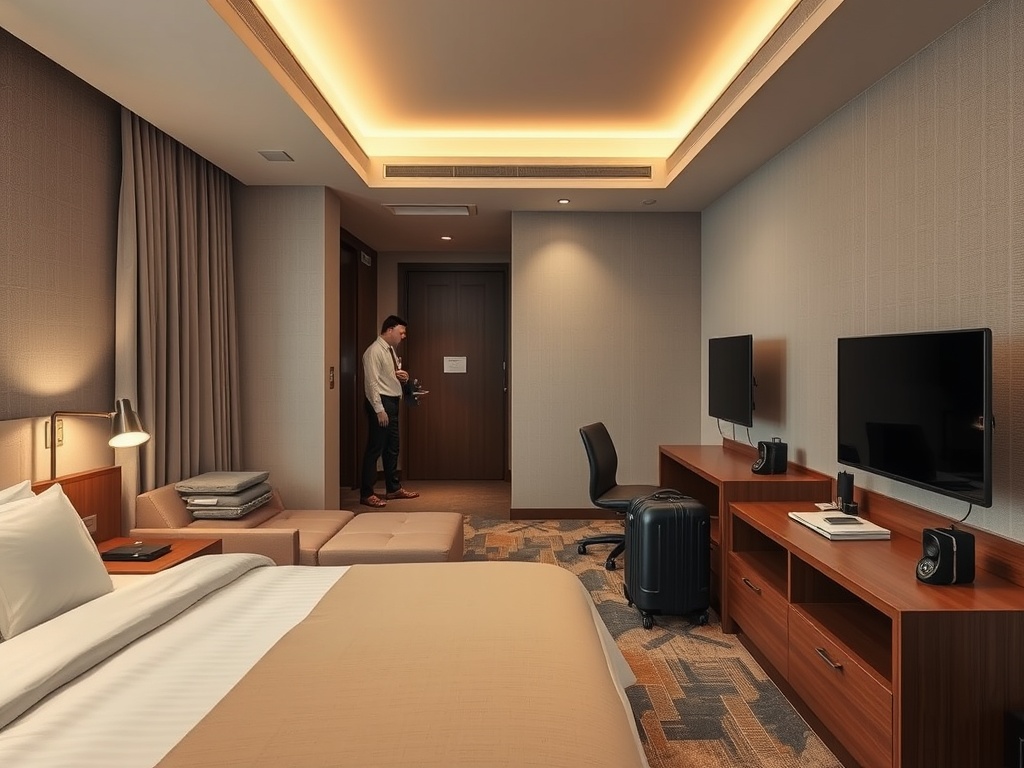
Operational friction can erase the value of a beautiful concept
Every design move carries an operating footprint. Housekeeping must access and reset it, maintenance must repair it, staff must explain it, and guests must use it safely. Materials that soil quickly, decorative lighting with difficult controls, furniture that blocks cleaning paths, or complicated arrival choreography can create labor and service costs that were not visible in the concept render.
Operators evaluating design-led upside should therefore pair guest-facing ambitions with automation and labor planning. That does not mean designing only for efficiency. It means making the labor requirement explicit so management can decide whether a more distinctive experience justifies the ongoing complexity.
Measure uplift against a baseline and isolate what changed
A renovation can coincide with pricing changes, a new brand, a distribution shift, stronger market demand, or a revised service model. If all of those move together, management should be careful about attributing performance to design alone. A useful measurement plan records the pre-change baseline and separates indicators that design could plausibly influence, such as room-category mix, conversion on redesigned room types, recurring maintenance issues, guest comments about the changed spaces, or usage of a new amenity.
Where possible, compare renovated and non-renovated inventory, phased floors, or similar periods while acknowledging other changes. The point is not to create laboratory certainty in a live hotel. It is to avoid telling an investment story that the data cannot support.
Positioning determines which design signals deserve capital
The same physical feature can have different strategic value at different properties. A large communal table may support a social, work-friendly positioning but feel irrelevant at a privacy-led retreat. A dramatic arrival sequence may matter for an occasion hotel but add little to an airport property where speed and wayfinding dominate. Design should therefore start with a clear property positioning decision, then translate that choice into a few consistent spatial cues.
Capital planning also needs an exit question: how specialized is the intervention, and how hard will it be to adapt if the demand mix changes? Flexible layouts, durable materials, modular elements, and accessible circulation can preserve optionality. Highly customized features can still be appropriate, but the operator should know which future uses they constrain.
Separate design preference from design performance
Internal teams may personally prefer one aesthetic, but preference is not the same as property performance. Use guest research, booking behavior, operational feedback, maintenance history, and sellable product differences to challenge subjective reactions. A design can be commercially appropriate without being universally liked, provided it serves the intended demand occasion and does not create avoidable accessibility or operating problems.
Design the handoff from capital project to hotel operations
Revenue assumptions are often made during design and then forgotten when the space opens. Before handover, the project team should convert design intent into room attributes, maintenance standards, cleaning procedures, photography requirements, sales language, staff training, and measurement ownership. If the commercial and operating teams receive only drawings and finish schedules, the intended value may never reach the booking path or daily service model.
The opening period is also a chance to identify which design features need adjustment. Guest movement, queue formation, furniture wear, housekeeping access, acoustic behavior, lighting preferences, and wayfinding can differ from the design model. Small post-opening changes may protect both guest experience and the revenue case without requiring another major capital cycle.
From concept approval to a testable operator brief
Before approving a design-led revenue initiative, operators can require four statements: the guest problem being solved, the observable product difference being created, the operating cost or process change required, and the commercial indicator that will be watched after launch. If a proposal cannot answer those questions, it may still be a valid aesthetic investment, but its revenue case is not yet complete.
A useful next step is to take one planned refurbishment area and rewrite the brief in operational language. Describe what guests will notice, what staff will do differently, how the feature will appear online, and what evidence would justify repeating the concept elsewhere. That turns design from a promise of uplift into a hypothesis the hotel can actually manage.