
Healthy eating while traveling is less about finding perfect meals and more about protecting a few reliable basics: regular eating opportunities, protein and produce when available, enough fluids, and food-safety choices suited to the destination. A flexible plan works better than trying to reproduce your home routine exactly.
TL;DR Plan one meal ahead, carry a shelf-stable backup, and build most meals from a protein source, a plant food, and a satisfying carbohydrate. Enjoy local foods intentionally. For international travel, treat safe food and water practices as part of healthy eating, not as a separate concern.
Decide what “healthy” needs to accomplish
Travel goals differ. A business traveler may need steady energy through meetings; an active vacationer may need more carbohydrate and fluids; someone managing diabetes, allergies, kidney disease, or gastrointestinal conditions may have non-negotiable requirements. Define two or three priorities before departure instead of using a vague rule to “eat clean.”
Useful priorities might include eating breakfast before long meetings, having vegetables or fruit twice daily, carrying a medically appropriate snack, or limiting alcohol on nights before early activity. These behaviors are observable and adaptable. They also leave room for culture, pleasure, and spontaneous meals.
The USDA’s MyPlate framework offers a simple reference built around variety across fruits, vegetables, grains, protein foods, and dairy or fortified alternatives. You do not have to arrange every travel meal into exact sections; use the pattern across the day.
Pack a small food safety net
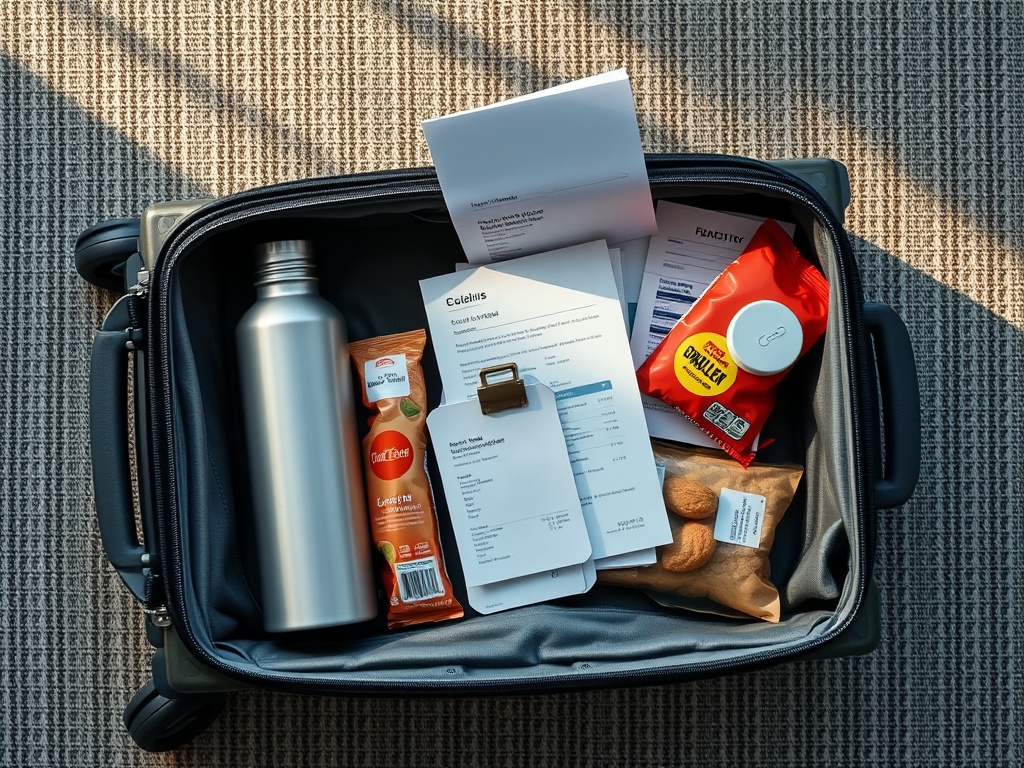
Bring foods that tolerate delays and fit any security or customs rules: nuts or seeds, roasted legumes, whole-grain crackers, shelf-stable tuna packets where permitted, dried fruit, or a protein bar you have used before. A backup prevents a missed connection from turning hunger into the only decision-maker.
For dietary restrictions, carry translated information about allergies or medically required exclusions. Keep medication and essential nutrition supplies in hand luggage when possible, following carrier and destination rules. Do not rely on a new supplement or unfamiliar packaged product to replace meals throughout the trip.
If travel interrupts training, resistance-band strength work can offer a portable option, but food intake should reflect the whole day rather than trying to “earn” meals through exercise.
Use a flexible meal-building formula
At restaurants, airports, hotel buffets, or convenience stores, scan first for three components:
- A protein food such as eggs, yogurt, beans, lentils, tofu, fish, poultry, or lean meat.
- A fruit or vegetable, fresh or cooked as food-safety conditions allow.
- A satisfying carbohydrate such as oats, bread, rice, potatoes, pasta, or whole grains.
Add fats, sauces, and desserts according to appetite, preference, and health needs. This is a decision aid, not a rule that labels food as good or bad. If one meal lacks produce or protein, the next eating opportunity can restore balance without compensation or guilt.
| Travel setting | Practical choice | Useful backup |
|---|---|---|
| Airport morning | Eggs or yogurt, fruit, and toast or oats | Nuts plus a banana |
| Road trip | Bean bowl, sandwich, or salad with protein | Crackers and shelf-stable protein |
| Hotel breakfast | Oats or eggs with fruit | Packaged oatmeal cup |
| Restaurant dinner | Local entrée with a vegetable side | Eat normally at the next meal |
Handle buffets, restaurants, and local specialties
Look over all options before filling a plate. Choose the foods you genuinely want, include items that support fullness, and sit down to eat rather than grazing while distracted. At a restaurant, ask straightforward questions about ingredients or preparation when they affect allergies, religious practice, or medical needs.
Local food is part of travel. Pick experiences that matter and enjoy them without turning the rest of the day into restriction. A special dessert, regional dish, or celebratory meal is compatible with an overall nutritious pattern. Perfection is not the standard, and the strategies in reducing emotional perfectionism around progress apply to eating routines too.
Hydration without chasing a universal number
Fluid needs change with climate, altitude, activity, pregnancy, illness, and medications. Carry a refillable bottle where water is safe, drink with meals, and pay attention to thirst and urine color while recognizing that supplements and some medications can alter color. Heavy sweating or prolonged exercise may require a more specific hydration and electrolyte plan.
Alcohol can disrupt sleep, judgment, and hydration, and its effects may feel stronger with jet lag or altitude. Alternate with water, eat before drinking, and stay within any limits given by your clinician. People who are pregnant, driving, taking interacting medicines, or advised not to drink should avoid alcohol.
Food and water safety abroad
Nutrition quality matters only if the food is safe to consume. The 2026 CDC Yellow Book food and water precautions advises extra caution where sanitation is inadequate or uncertain. Fully cooked food served hot is generally safer than raw or undercooked animal foods, unpasteurized dairy, or produce washed with unsafe water.
Use factory-sealed bottled water or appropriately treated water when local tap-water safety is uncertain, including for ice and toothbrushing. Wash hands with soap and safe water when possible. Travelers who are pregnant, immunocompromised, older, or managing certain conditions should discuss destination-specific precautions with a travel-medicine professional.
Adjust expectations during active or low-activity trips
Long walking days may increase hunger, while conference days can involve hours of sitting and food always in reach. Respond to actual appetite and demands instead of applying your usual portions automatically. If you are in a deliberate fat-loss phase, the article on deciding when to take a diet break explains why travel may be a sensible time to maintain rather than push the deficit.
For flights and long drives, regular meals and light movement can support comfort. Avoid extreme fasting if it leaves you dizzy, irritable, or unable to manage medication timing. Bring a plan for the first meal after arrival so fatigue does not force a choice that conflicts with your medical needs.
Portion needs may also change across the trip. Start with an amount that seems satisfying, eat at a normal pace, and add more if hunger remains. Restaurant portions can be shared or saved when storage is safe, but you do not need to stop eating simply because a plate is larger than at home. Appetite, not plate size alone, should inform the decision.
Return home without compensation
After the trip, resume your usual grocery, meal, and activity patterns at the next practical opportunity. Scale changes immediately after travel can reflect fluid, sodium, carbohydrate storage, bowel contents, and menstrual factors, not only body fat. Punitive workouts or severe restriction are unlikely to improve the transition.
Before your next departure, write three anchors: one breakfast option, one portable snack, and one restaurant strategy. Confirm destination-specific food-safety advice, then leave room for the trip to be enjoyable. A registered dietitian can help if allergies, gastrointestinal disease, diabetes, eating-disorder history, or other clinical needs make travel planning more complex.