
Room merchandising turns physical inventory into choices a guest can understand and value. Operators should organize rooms around meaningful, consistently deliverable attributes, then align content, photography, pricing, availability, and front-desk assignment so the booked difference survives from search to stay.
TL;DR Merchandise fewer, clearer differences before creating more categories. Use attributes guests can recognize and operations can reliably fulfill; price the ladder based on demand and scarcity; keep channel data synchronized; and audit whether the assigned room actually matches what the confirmation led the guest to expect.
A room type is a promise, not an internal inventory code
Many hotel taxonomies grow from operational history: bed codes, legacy renovation phases, floor blocks, or distribution limitations. Guests do not care why a code exists. They care whether the category gives them a reason to pay more or choose differently. A strong room type therefore describes a meaningful difference such as space, layout, view, quietness, balcony, bath configuration, connecting capability, accessibility feature, or work setup.
The first operator task is to identify which differences are visible, scarce, consistently assignable, and valuable to an identifiable booking need. Categories that fail those tests may be better managed as operational attributes rather than marketed as separate products.
Attribute models can make distribution more precise
The AHLA/HTNG work on attribute modeling for the distribution ecosystem focuses on sharing availability, rates, and inventory in ways that can support more detailed merchandising. For operators, the promise is greater flexibility in how rooms and experiences are sold. The risk is complexity: every additional attribute creates mapping, availability, pricing, content, and fulfillment requirements across systems and channels.
A property should therefore prioritize attributes with clear guest relevance and reliable data. Selling a feature that the PMS cannot consistently assign is an invitation to service recovery.
Merchandising should expose real choice without overwhelming the shopper
More room options do not automatically create better conversion. A booking path can become harder when several categories differ only by vague adjectives or when photos do not show the distinction. Operators should test whether a guest can answer three questions quickly: What is different? Why might that difference matter to me? What will I definitely receive if I select it?
This is where design and revenue planning should meet e-commerce. Designers and operators may know that two rooms feel different because of light, layout, storage, or furniture, but the commercial team needs a truthful way to represent that difference before the stay.
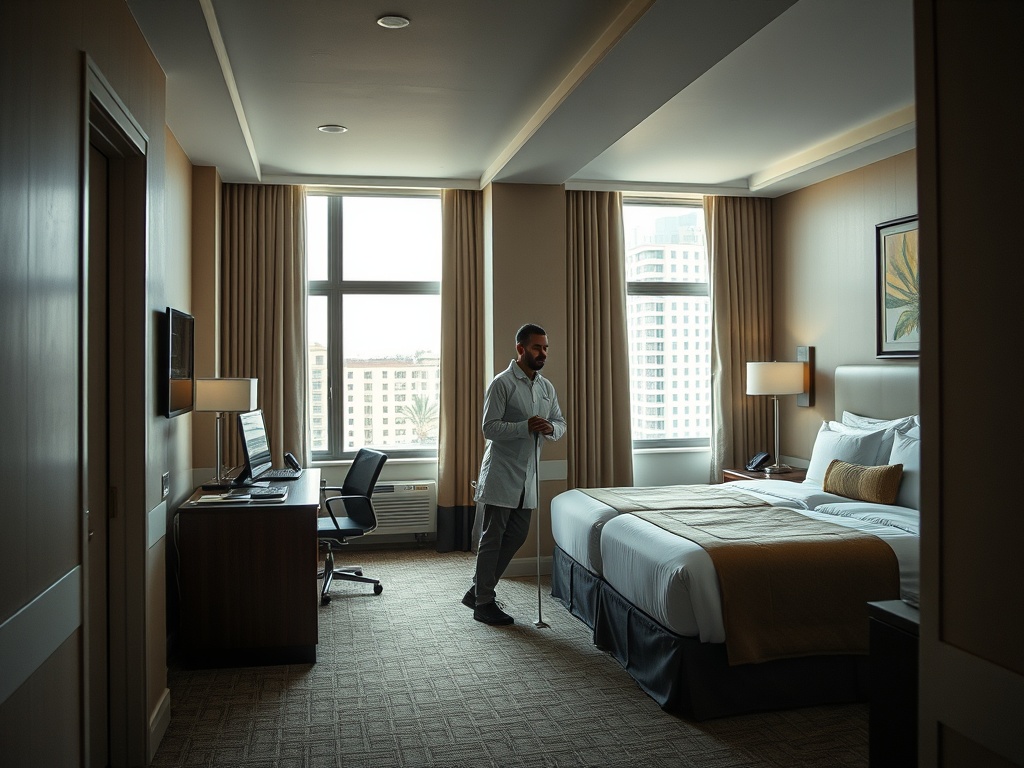
Personal choice can support attachment when the choices are meaningful
Cornell’s research on hotel-room customization and psychological ownership suggests that guest involvement in room choice can strengthen attachment and loyalty intentions. Room merchandising can support that principle by allowing guests to select meaningful features rather than treating every assignment as invisible back-end optimization. The exact commercial effect will vary by property, but the research-backed direction is useful: choice itself can be part of the experience.
The design challenge is to offer choice without implying a guarantee the hotel cannot keep. If a feature is request-only, label it as such. If it is guaranteed only within a paid category, make that distinction clear in the booking flow and confirmation.
The price ladder needs a scarcity and value rationale
A premium should correspond to an attribute or bundle that a meaningful share of guests values and that is constrained enough to justify differentiation. Views, outdoor space, larger layouts, rare bedding configurations, or high-demand locations can behave differently by property and season. Revenue teams should watch conversion by room type, upgrade acceptance, displacement, and unsold premium inventory rather than assuming the same premium is appropriate every day.
That work belongs beside total revenue management. A room feature may influence more than room rate; certain configurations can attract longer stays, families, groups, or guests with different ancillary patterns. The operator should evaluate the total effect where the data supports it.
Content accuracy is an operating control
Room descriptions, photo sets, amenity lists, occupancy rules, accessible features, and bed configurations should have named owners and a review cadence. Renovations, maintenance outages, furniture changes, or channel mapping updates can make content stale quickly. When the merchandising layer is wrong, the hotel may still technically deliver a room, but it can fail the guest’s reasonable expectation.
Distribution accuracy also intersects with rate parity controls. A price mismatch can be caused by the wrong room mapping rather than an intentional rate difference. Teams should diagnose product and price together before deciding which system or commercial rule is at fault.
Protect accessible inventory within the merchandising logic
Accessible rooms and features require particular care in naming, availability, assignment, and substitution. The commercial taxonomy should not obscure a feature a guest needs to select, and operational upgrades should not move a guest away from a required accessible configuration without clear agreement. Merchandising precision is therefore also part of service reliability and guest rights.
Use service recovery data to improve the room taxonomy
Complaints about view, noise, bed type, accessibility, connecting rooms, floor, or room size are not only service issues; they can reveal a merchandising problem. If guests repeatedly expect a feature that the category does not guarantee, the content may be ambiguous. If staff repeatedly substitute one category for another, the inventory ladder may be too granular or operationally unstable.
Revenue, front desk, housekeeping, and e-commerce teams should review those patterns together. A category that earns a small premium but causes frequent recovery cost may need a clearer promise, a different assignment rule, or removal. Conversely, a frequently requested feature that is currently unmanaged may deserve its own guaranteed attribute if the systems can support it.
Photography should prove the difference rather than decorate it
Room imagery is most useful when it helps the traveler distinguish categories. Standardize the key angles that show layout, window relationship, bathroom configuration, work area, outdoor space, or other important attributes, then add detail images only where they clarify a feature. Highly stylized images that hide scale or omit the distinctive attribute may support brand mood while weakening product comprehension.
Audit parity between the promise and the room status board
Merchandising quality depends on real-time operational truth. If a feature is sold as guaranteed while engineering, housekeeping, or inventory systems cannot flag its temporary unavailability, the commercial layer becomes unreliable. Build a process for maintenance blocks, out-of-order attributes, and renovation changes to flow into sell controls quickly enough that the booking promise reflects the rooms the hotel can actually assign. That control protects both conversion quality and front-desk recovery workload.
The best room ladder survives check-in
The final test happens at assignment. Front desk and rooms teams need visibility into the attributes sold, the rules for upgrades and downgrades, accessible-room protections, maintenance constraints, and how to recover when the exact product is unavailable. Overselling a category and improvising substitutions can undo all the clarity created online.
A practical next step is to take the five highest-volume room categories and run a merchandising audit from booking card to physical room. Compare name, photos, dimensions if published, bed setup, view or location claims, included features, and actual assignment logic. Remove distinctions that guests cannot perceive and strengthen the ones that create a real reason to choose.