
Preparing a home for severe weather alerts means building more than one reliable way to receive official warnings, making sure every household member recognizes the alert, and connecting each warning type to a specific action. Phones are useful, but a layered system can include Wireless Emergency Alerts, local notification systems, NOAA Weather Radio, and backup power for critical devices.
TL;DR: Enable official alerts on household phones, know which local agencies send opt-in notifications, keep a battery-powered or backup-capable weather radio where appropriate, charge portable power banks before forecast hazards, define a shelter location, and practice what to do when a warning arrives. Alerts matter only if they lead to a clear response.
Build More Than One Alert Path
No single alert method is perfect in every situation. A phone can be silent, out of battery, left in another room, or outside the affected alert polygon. Internet service can fail. Outdoor sirens may not be designed to wake people indoors or cover every location.
Ready.gov’s emergency alert guidance describes several official systems used in the United States, including Wireless Emergency Alerts, the Emergency Alert System, NOAA Weather Radio, and alerts distributed through FEMA’s Integrated Public Alert and Warning System. The National Weather Service also explains that Wireless Emergency Alerts can deliver certain critical warnings to compatible mobile devices without a separate subscription.
A practical home plan uses at least two independent channels when local hazards justify it. For many households, that may mean mobile alerts plus a weather radio or local emergency-management notification service.
Check Phone Alert Settings Before Storm Season
On each household phone, review emergency alert settings and confirm that government alerts are enabled according to the user’s needs and device options.
Also enable location services or permissions required by any local weather or emergency app you intentionally use. Do not assume a third-party app replaces official alerts. If you use one, choose a reputable service and understand whether alerts come from the National Weather Service, local emergency management, another government source, or a private forecast system.
Keep the phone audible enough to wake or reach you during forecast hazards. If a household member uses accessibility features, hearing devices, visual alerts, or vibration-based notification tools, test those functions before an emergency.
Add Local Alerts and NOAA Weather Radio Where Useful
Many counties, cities, campuses, and emergency-management agencies offer opt-in calls, texts, or emails for local hazards such as flash flooding, evacuation notices, wildfire, hazardous materials incidents, or shelter information. Availability varies, so check your local government or emergency-management website.
NOAA Weather Radio can provide continuous weather information and official warnings from National Weather Service offices. A receiver with battery backup can be useful where overnight severe weather, hurricanes, tornadoes, flash flooding, or frequent power outages make a second alert path valuable.
Choose a radio that suits the household and learn its settings before an event. If the device supports SAME or location-specific programming, follow the manufacturer’s instructions and official local guidance so you receive appropriate alerts without unnecessary alarm fatigue.
Connect Each Alert to an Action
An alert is only the trigger. Write down what the household should do for the hazards most likely in your area. For example, a tornado warning may mean moving immediately to a preselected interior shelter area, while a hurricane watch may start a longer preparation checklist. A flash flood warning may require avoiding a basement or moving away from low-lying routes, depending on local conditions.
Do not create generic actions without checking regional guidance. Severe weather behavior varies by hazard and location. Use local emergency management, the National Weather Service, and Ready.gov to confirm the correct response for your area.
If your household uses exterior lights during outages or arrivals, coordinate that equipment with outdoor-light automation so essential access lighting can still be operated manually if internet-connected routines fail.
Prepare the Home’s Alert Equipment
| Item | What to check | Why it matters |
|---|---|---|
| Mobile phones | Alerts enabled, charged, volume accessible | Primary personal warning channel |
| Portable power banks | Charged and tested | Keeps phones operating during outages |
| Weather radio | Batteries, location programming, volume | Independent broadcast alert option |
| Flashlights | Working batteries, known storage place | Safe movement after power loss |
| Battery lantern | Charge or batteries | Area lighting without open flame |
| Printed contacts | Current household and local numbers | Useful when a phone cannot access cloud contacts |
| Shelter supplies | Shoes, helmets if appropriate, essential medicines, pet needs | Reduces delay after a warning |
Choose and Clear a Shelter Location
Before a warning, identify the safest available location for the hazards relevant to your home. The best location for a tornado is not necessarily the same as the safest place for flooding, wildfire, or extreme heat. Use official local instructions.
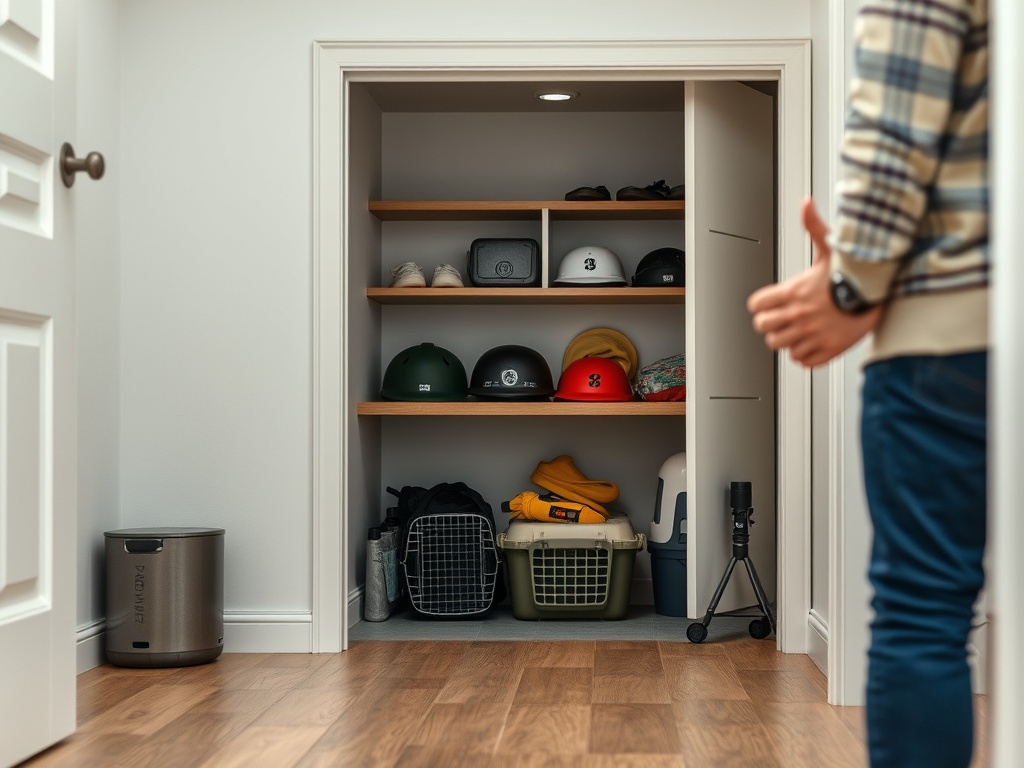
Keep the route to that location clear. Do not bury flashlights, shoes, helmets, pet carriers, or emergency supplies behind seasonal storage. If you need to reorganize closets or utility areas, a disciplined seasonal decor storage system can free access without mixing emergency equipment into holiday bins.
For households with children, older adults, pets, or people with mobility, sensory, or medical needs, plan the extra time and equipment required to move safely. Identify who is responsible for pets, medications, mobility devices, and communication with family members.
Plan for Power and Connectivity Loss
Charge phones and power banks when severe weather is forecast. Keep charging cables in a known place. If you rely on a home internet connection for smart speakers, cameras, or app-based alerts, remember that a power or provider outage can disable them.
Battery radios and cellular alerts offer different failure modes, which is why a layered system is useful. If you use a generator, follow all manufacturer and public-safety guidance for safe outdoor placement and carbon-monoxide prevention. Generator safety is a separate topic and should not be improvised during a storm.
Avoid candles as the default emergency-lighting choice when battery lanterns are available. Open flames add fire risk during an already disruptive event.
Reduce Alert Fatigue Without Disabling Critical Warnings
People are more likely to respond when they understand the difference between a watch, warning, advisory, evacuation notice, and routine forecast notification. Learn the terms used by your local authorities and National Weather Service office.
Trim low-value app notifications if they are causing constant interruptions, but be cautious about turning off official emergency alerts. The exact settings and consequences vary by device and alert type. If you are unsure, review current official instructions for your phone and jurisdiction.
Practice a Short Warning Drill
Ask simple questions: Could someone hear the alert from a bedroom? Does the radio wake a sleeping adult? Is the shelter path blocked? Can the household locate flashlights in the dark? Does everyone know which alerts require immediate action?
Repeat after moving, remodeling, changing phone settings, adding a new family member, or changing local hazards. Severe-weather readiness is a household system, not a one-time purchase.
Keep Visual and Home Systems Simple
Check alert equipment at the start of your region’s main severe-weather season and again before a forecast high-risk event. Replace expired batteries and update phone numbers, local alert subscriptions, and household roles.
Make Alerts Actionable Before the Storm
The strongest setup combines official alert channels, backup power, a known shelter or response location, and practiced household actions. Enable and test the systems before severe weather is close enough to create urgency. When an alert sounds, everyone should know what it means, where to go, and which source to use for the next official update.
This emergency-preparedness content is for informational and educational purposes only. Follow current instructions from the National Weather Service, FEMA, local emergency management, public-safety officials, and other authorities for your specific hazard and location.[/