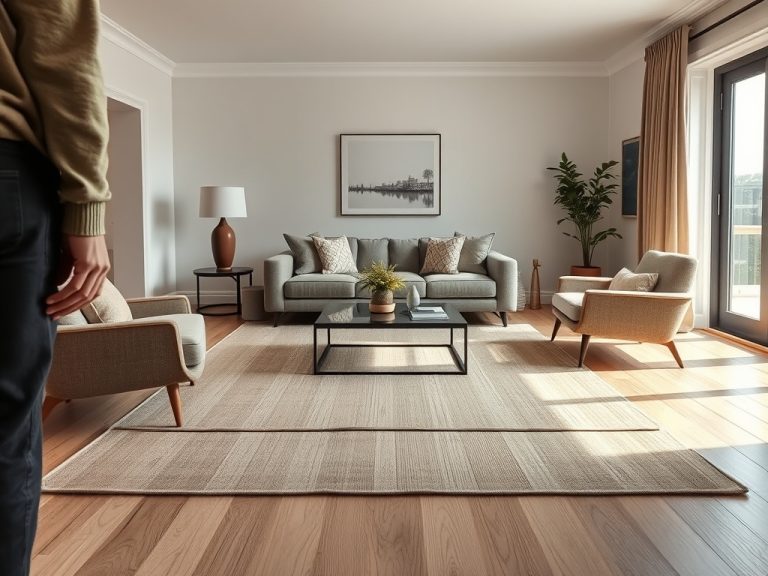
To reduce apartment echo naturally, add soft, porous surfaces where sound is reflecting most: rugs, curtains, upholstered furniture, bedding, fabric wall hangings, books, and other textured furnishings. The biggest improvement usually comes from treating several hard surfaces at once rather than adding one decorative object and expecting it to solve the room.
TL;DR: Start with the floor, windows, and large bare walls. Add a properly sized rug with a pad, use full curtains where practical, keep upholstered seating in the room, soften one or two large wall areas, and break up empty corners. Test changes by listening before and after instead of assuming thicker always means better.
Understand What Echo Actually Is
Echo and reverberation occur when sound energy reflects repeatedly from hard surfaces such as bare floors, glass, plaster, tile, and concrete. In a small apartment, the effect can be especially noticeable because walls, ceiling, and floor are close together and many rooms have limited furniture.
The principle behind sound softening is straightforward: porous materials absorb some sound instead of reflecting all of it. The CDC’s National Institute for Occupational Safety and Health notes in its engineering guidance for noise control that porous materials such as textiles and foam can reduce reflected sound. That source is written for workplaces, not apartment decorating, so treat the underlying acoustics principle as general while adapting the solutions to residential life.
For a renter, the goal is usually not true soundproofing. Soft furnishings can reduce internal echo and make speech, TV audio, and everyday activity feel less sharp, but they do not necessarily stop sound transmission through walls, ceilings, doors, or floors.
Start With the Largest Hard Surface: the Floor
A hard floor can reflect a great deal of sound in a sparsely furnished room. An area rug adds absorption across a broad surface without construction. A rug pad can add cushioning and may increase the amount of soft material in the floor assembly, although its acoustic effect depends on thickness, density, and the rest of the room.
Choose a rug large enough to sit beneath the main furniture group rather than using a small decorative mat in the center of a large hard floor. If you need help planning that footprint, the guide to the best area rug sizes by room explains how to measure around sofas, beds, dining tables, and walking paths.
In a studio, one larger rug can also define the living zone visually. In a bedroom, a rug under the bed or two side runners can soften footfall and reduce the amount of exposed reflective flooring.
Use Curtains to Treat Glass and Window Walls
Glass is highly reflective. Curtains add a soft layer in front of it, particularly when they have some fullness rather than hanging perfectly flat. Heavier fabrics generally absorb more sound than sheer material, but room-darkening or heavy curtains can also affect daylight, ventilation, and the visual weight of a small room.
Do not buy curtains solely because a product claims to be “soundproof.” In residential decor, many such claims are marketing shorthand. Unless a product provides reliable acoustic test data, treat it as a soft furnishing that may reduce reflections rather than a guaranteed sound-isolation system.
Add Absorption to Large Bare Walls
A large empty wall can contribute to a bright, reflective room. Fabric art, textile hangings, framed pieces with soft backing, cork boards, or bookcases can break up that surface. A packed bookcase is not a purpose-built acoustic panel, but its uneven depths and mixed materials can help scatter reflections while adding storage.
The U.S. General Services Administration’s Sound Matters guidance emphasizes that acoustical comfort depends on the combined behavior of space, surfaces, and layout. Again, that document focuses on workplaces, but the planning lesson applies: solving acoustics is usually a room-level exercise, not a one-product fix.
For renters, removable textile panels or tension-mounted solutions can be more practical than permanently attached products. Follow lease rules and use appropriate anchors for the weight of anything mounted overhead or on walls.
Choose Furniture That Helps Without Overcrowding
Upholstered sofas, fabric chairs, padded headboards, cushions, and bedding introduce absorbent surfaces. In a very empty apartment, even normal furniture can noticeably change how the room sounds. The goal is not to fill every wall and corner. Too much furniture reduces circulation and can make a small apartment harder to use.
Keep the major furniture arrangement functional first. If storage is also a problem, drawer organizers for kitchens and bathrooms can reduce visible clutter without requiring extra freestanding furniture that consumes floor area.
Treat Corners and Empty Zones Selectively
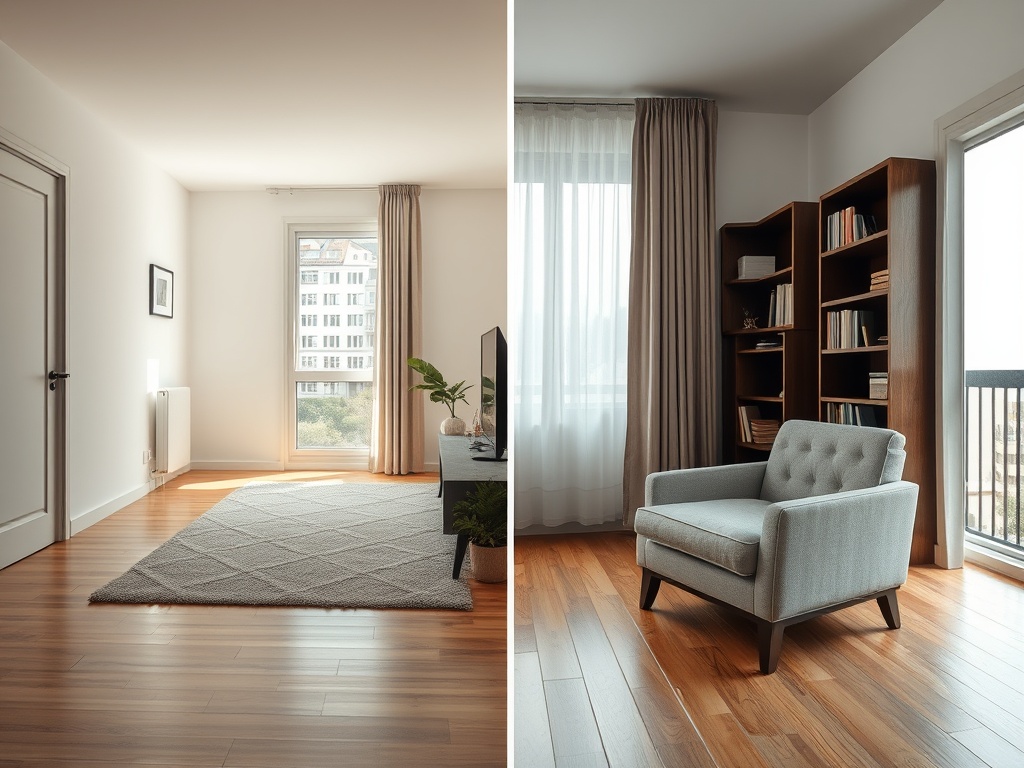
Sound can feel especially sharp in rooms with bare corners and parallel hard walls. Tall curtains, a fabric floor lamp shade, a plant with a substantial canopy, a bookshelf, or an upholstered chair can make an empty corner less acoustically stark. Plants are not substitutes for acoustic panels, but a large plant can add irregular surfaces and contribute to a more furnished environment.
If the apartment has automated lamps, keep cords and controls tidy. A broader outdoor-light automation guide covers control principles that can also inspire simpler timer-based routines indoors, though indoor devices should be selected for their own ratings and instructions.
A Room-by-Room Softening Checklist
Living room
- Use a rug that reaches into the seating group.
- Add curtains to major windows if the lease and room layout allow.
- Keep upholstered seating rather than relying only on hard chairs.
- Soften one large bare wall with textiles, books, or appropriately mounted acoustic decor.
- Add cushions or throws only if they support normal use, not just to accumulate fabric.
Bedroom
- Use bedding, a rug or runners, and curtains as the primary soft surfaces.
- Consider an upholstered or padded headboard if you already need a headboard.
- Avoid stuffing storage under the bed so tightly that cleaning and ventilation become difficult.
Dining area
- A low-pile rug can reduce hard-floor reflection if chair movement remains easy.
- Fabric seat cushions can add a little absorption without changing the room footprint.
- Wall art or a textile feature can soften an otherwise bare dining wall.
Test Before Buying More
Use a simple clap test or play familiar speech audio, then listen for the tail of sound after each change. The test is subjective, but it helps you compare the room to itself. Add one meaningful surface at a time so you can tell which change is helping.
Do not confuse quieter reverberation with hearing safety. If the apartment is exposed to very loud music, tools, machinery, or other hazardous noise, decorative treatments are not a substitute for controlling the source or following hearing-protection guidance.
Common Mistakes That Make the Room Worse
- Buying tiny rugs: Small rugs leave most of the reflective floor exposed.
- Covering only one surface: Echo often involves several parallel hard surfaces.
- Using heavy decor without secure mounting: Safety comes before acoustics.
- Overfilling a small room: More objects can hurt circulation without delivering a proportional acoustic benefit.
- Expecting curtains to soundproof a wall: Curtains primarily treat reflections in the room; they are not a guaranteed barrier to neighbor noise.
- Ignoring the source: A loud fan, speaker in a corner, or vibrating appliance may need repositioning or repair.
Reduce Echo Without Overfilling the Room
The most natural approach is to work from largest surfaces to smallest: soften part of the floor, treat large glass areas, add normal upholstered furniture, and break up one or two bare walls. Listen after each step. A small apartment can feel calmer without becoming stuffed with acoustic products, and the best changes are usually the ones that also improve comfort, storage, or visual balance.
This apartment and acoustics content is for informational and educational purposes only. It does not replace professional acoustic, structural, fire-safety, electrical, accessibility, or lease-specific advice.[/