
Most vegetable garden problems are easier to solve when you identify the pattern before treating the plant. Start by checking water, weather, soil, sunlight, spacing, and recent changes, then inspect for pests or disease. Quick fixes should correct the likely cause without creating a second problem through unnecessary fertilizer, pesticide, or overwatering.
TL;DR: When a vegetable looks unhealthy, check the whole bed first. Wilt across several crops often points to water or weather; holes or chewed edges suggest feeding pests; spots and rots can involve disease or moisture conditions; poor fruit set can be tied to temperature or pollination. Diagnose before you spray, feed, or water again.
First Question: Is the Problem Widespread or Plant-Specific?
Walk the entire garden before touching the affected plant. If several unrelated crops show the same symptoms at once, consider environmental causes such as heat, cold, drought, waterlogging, herbicide drift, or a recent fertilizer application. If one plant family is affected while others look normal, a pest, disease, or crop-specific nutrient issue becomes more likely.
University of Maryland Extension’s vegetable-problem materials emphasize that many garden issues are caused by nonliving factors rather than insects or disease. University of Minnesota Extension also recommends managing the conditions that favor healthy plants and reducing disease pressure through spacing, watering, and sanitation.
Do not treat a symptom name as a diagnosis. “Yellow leaves” can result from too much water, too little water, nutrient issues, root damage, aging foliage, disease, pests, or weather stress.
Problem 1: Wilting Plants
Wilting is a loss of leaf firmness, but the cause is not always dry soil. Push a finger or small trowel into the soil several inches away from the stem. If the root zone is dry, water deeply enough to wet the active root area rather than sprinkling only the surface.
If the soil is already wet, more water may worsen the problem. Waterlogged roots can struggle for oxygen, and some root diseases thrive in saturated conditions. Check whether the bed drains, whether an irrigation emitter is stuck on, or whether heavy rain has kept soil wet for several days.
Temporary afternoon wilting during extreme heat can occur even when soil has moisture, especially on large-leaved plants. Recheck in the cooler evening or morning before making a major irrigation change.
Quick fix: Verify soil moisture first. Correct the watering pattern, improve drainage where practical, and avoid fertilizing a severely stressed plant until the cause is clearer.
Problem 2: Yellowing Lower Leaves
Older lower leaves sometimes yellow naturally, but widespread yellowing can point to root stress, nutrient imbalance, poor drainage, or disease. Look at where the yellowing starts and whether veins remain green, leaves have spots, or the plant is also stunted.
Do not automatically add nitrogen. Excess fertilizer can burn roots, increase weak growth, or create nutrient imbalances. If several plants show similar symptoms and cultural problems are not obvious, a soil test can help identify pH and nutrient issues.
Quick fix: Remove only leaves that are fully yellow or diseased, correct watering and drainage, and use soil-test recommendations instead of guessing with fertilizer.
Problem 3: Holes, Chewed Edges, or Skeletonized Leaves
Chewing damage suggests insects, slugs, snails, or larger animals. Inspect both sides of leaves early in the morning and again in the evening. Look for larvae, beetles, frass, slime trails, egg clusters, and patterns specific to the crop.
A few holes do not always justify treatment. Many established vegetables can tolerate modest leaf damage. The most targeted response may be hand-picking, physical barriers, or protecting young plants rather than applying a broad insecticide.
Quick fix: Identify the pest first. Use exclusion, hand removal, or a crop-appropriate control based on extension guidance. If using any pesticide, read and follow the label because the label defines legal uses, application rates, preharvest intervals, and safety requirements.
Problem 4: Leaf Spots and Blights
Spots can come from fungi, bacteria, environmental injury, spray damage, or nutrient problems. Disease becomes more likely when spots expand, develop distinct margins, spread from lower leaves upward, or appear during prolonged wet conditions.
University of Minnesota Extension advises home gardeners to monitor early, space plants for airflow, manage leaf moisture, remove affected plant material when appropriate, and avoid working among wet plants when pathogens can spread more easily.
Quick fix: Remove badly affected leaves without stripping the plant, water at soil level when possible, improve spacing and airflow, and confirm the disease before applying a fungicide. Many fungicides protect healthy tissue better than they cure damaged leaves.
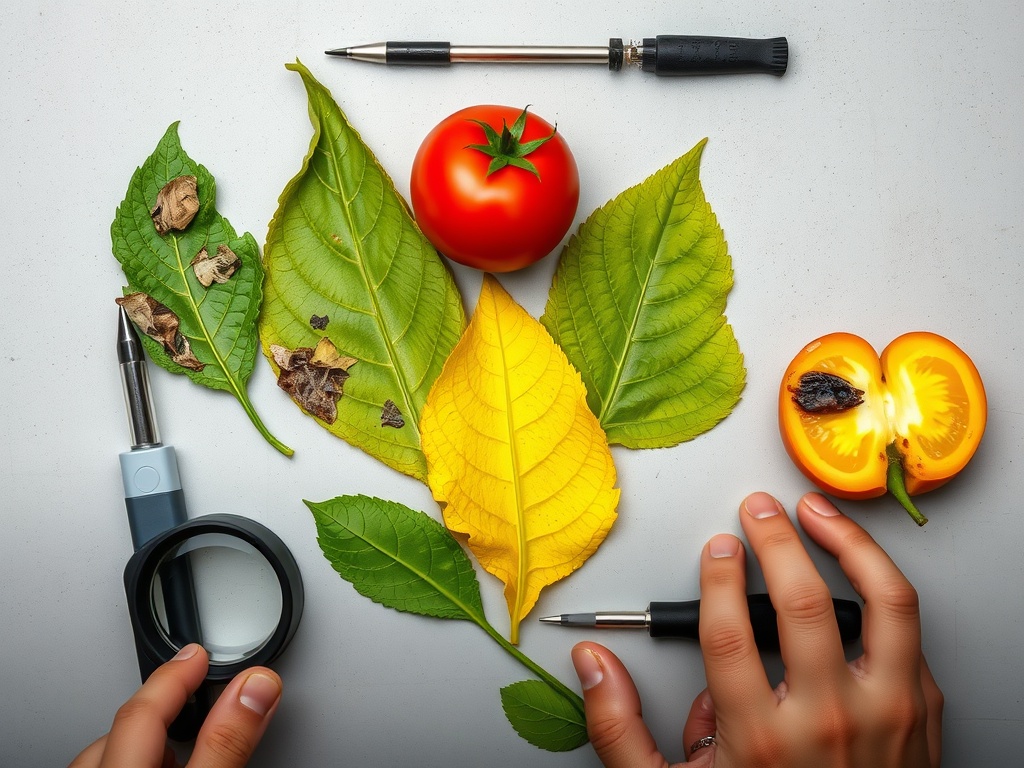
Problem 5: Blossom-End Rot on Tomatoes, Peppers, or Squash
Blossom-end rot appears as a dark, sunken area at the blossom end of fruit. Although calcium is involved in the affected tissue, the garden problem is often tied to inconsistent water supply and the plant’s ability to move calcium into developing fruit rather than simply a shortage of calcium in the soil.
Adding calcium without a soil test may not solve the cause. Drying and rewetting cycles, root damage, overly rapid growth, or other stress can contribute.
Quick fix: Remove badly affected fruit, stabilize watering, mulch to moderate soil moisture, and avoid damaging roots. Use a soil test before adding lime or other calcium amendments because they can also change soil pH.
Problem 7: Powdery or White Coating on Leaves
Quick fix: Confirm the diagnosis, remove heavily affected tissue if the plant can tolerate it, improve airflow, and use only a product labeled for that crop and disease if treatment is needed.
Problem 8: Stunted Growth Across the Bed
Quick fix: Correct the limiting condition rather than pushing growth with high fertilizer rates. If the site cannot provide enough sun or drainage for a crop, changing the crop may be more effective than repeatedly treating symptoms.
Problem 9: Plants Look Healthy but Produce Very Little
Quick fix: Thin crowded plants, harvest on schedule, reduce unnecessary nitrogen, and adjust future planting dates or varieties to local conditions.
Use a Simple Diagnostic Order
When a problem appears, follow the same sequence:
- Check soil moisture. Too wet and too dry can create similar symptoms.
- Review recent weather. Heat, cold, hail, wind, and heavy rain leave patterns.
- Look at the whole bed. Widespread symptoms suggest a shared cause.
- Inspect both sides of leaves. Look for insects, eggs, webbing, and frass.
- Check stems and fruit. Damage may not begin on leaves.
- Review recent inputs. Fertilizer, herbicide, mulch, compost, or spray can matter.
- Use local extension resources. Regional pests and disease timing differ.
This deliberate diagnosis is similar to plant care indoors. The guide to cleaning dusty houseplant leaves also uses close inspection as a maintenance opportunity rather than treating appearance alone.
Avoid Quick Fixes That Create New Problems
Keep records of planting dates, varieties, weather events, and recurring problems. A few notes can reveal patterns next season that are hard to remember months later.
If your garden sits near patios or exterior fixtures, make sure watering does not spray electrical equipment. A separate guide to automating outdoor lighting efficiently covers control planning, but outdoor electrical equipment should always be used according to its weather rating and installation instructions.
Diagnose Before You Treat
The fastest path to a healthier vegetable garden is usually a better diagnosis, not a stronger product. Check water and weather first, inspect the whole plant, identify pests or disease as specifically as possible, and use local extension recommendations. When you correct the cause rather than chasing the symptom, quick fixes are more likely to stay fixed.
This vegetable-gardening content is for informational and educational purposes only. Pest, disease, pesticide, fertilizer, irrigation, and soil recommendations vary by crop and region. Follow local extension guidance, product labels, and applicable regulations.[/