Clean dusty houseplant leaves with the gentlest method the plant can tolerate: a soft damp cloth for large sturdy leaves, a lukewarm rinse for many smaller-leaved plants, or a soft brush for fuzzy, fragile, or moisture-sensitive foliage. Skip leaf-shine products unless a trusted plant-specific source recommends them, and inspect for pests while you clean.
TL;DR: Move the plant out of direct sun, support each leaf, use lukewarm water and a soft cloth or gentle rinse, clean both upper and lower surfaces when appropriate, let excess water drain, and return the plant only after it has stopped dripping. Never scrub delicate foliage or assume every species can be showered.
Why Leaf Cleaning Helps
Dust can accumulate on indoor foliage, especially near open windows, kitchens, construction, heating systems, or busy roads. A dusty leaf looks dull and can reduce the amount of light reaching the leaf surface. Cleaning also gives you a close view of leaf undersides, stems, and petioles where insects or damage may be easier to notice.
University of Minnesota Extension recommends cleaning houseplant foliage and notes that a gentle wipe or lukewarm rinse can work for many common plants. Penn State Extension also advises against unnecessary leaf-shine products, noting that a soft damp cloth is generally sufficient.
Cleaning is care, not treatment. If leaves are sticky, spotted, webbed, distorted, or covered with scale-like bumps, the plant may have a pest or disease problem that needs diagnosis rather than more polishing.
Gather Simple Supplies
You usually need only:
- A bowl or sink with lukewarm water
- Two or more soft microfiber or cotton cloths
- A soft artist’s brush or makeup-style brush reserved for plants
- A clean towel to protect the floor or furniture
- A sink, tub, or shower for plants that tolerate rinsing
- Pruning snips or scissors only if you also plan to remove dead leaves
Avoid household polish, cooking oil, mayonnaise, milk, or improvised shine mixtures. These can leave residue and may interfere with the leaf surface or attract dust. If a plant has a naturally waxy, powdery, or fuzzy coating, rubbing may damage that protective or ornamental surface.
Step 1: Identify the Leaf Type
Large smooth leaves on plants such as rubber plants, monsteras, many philodendrons, and some palms are usually easy to wipe. Numerous small leaves may be faster to rinse gently. Fuzzy leaves, succulents with powdery bloom, delicate fern fronds, and species that dislike wet foliage need more cautious handling.
When you are unsure, look up the species and its care needs before using water directly on the foliage. A generic houseplant method should never override plant-specific guidance.
Also check the pot. If the container has no drainage hole or the soil is already saturated, a shower rinse could add more water than the root system can handle. You can still clean the leaves with a cloth while keeping extra water out of the pot.
Step 2: Move the Plant to a Safe Cleaning Spot
Work away from strong direct sun. Water droplets and sudden changes in light or temperature can stress some foliage, and direct sun makes it harder to clean comfortably. A kitchen sink, bathtub, shower, or towel-covered table works well.
Support the pot securely. Large top-heavy plants can tip when leaves are moved or sprayed. If you are carrying a heavy planter, use safe lifting technique or ask for help rather than pulling the plant by the stems.
Before cleaning, inspect the plant for pests. University of Minnesota Extension’s indoor-plant pest guidance recommends checking leaf tops and undersides, stems, containers, and nearby surfaces for insects, webbing, eggs, and sticky honeydew.
Step 3: Wipe Large Smooth Leaves
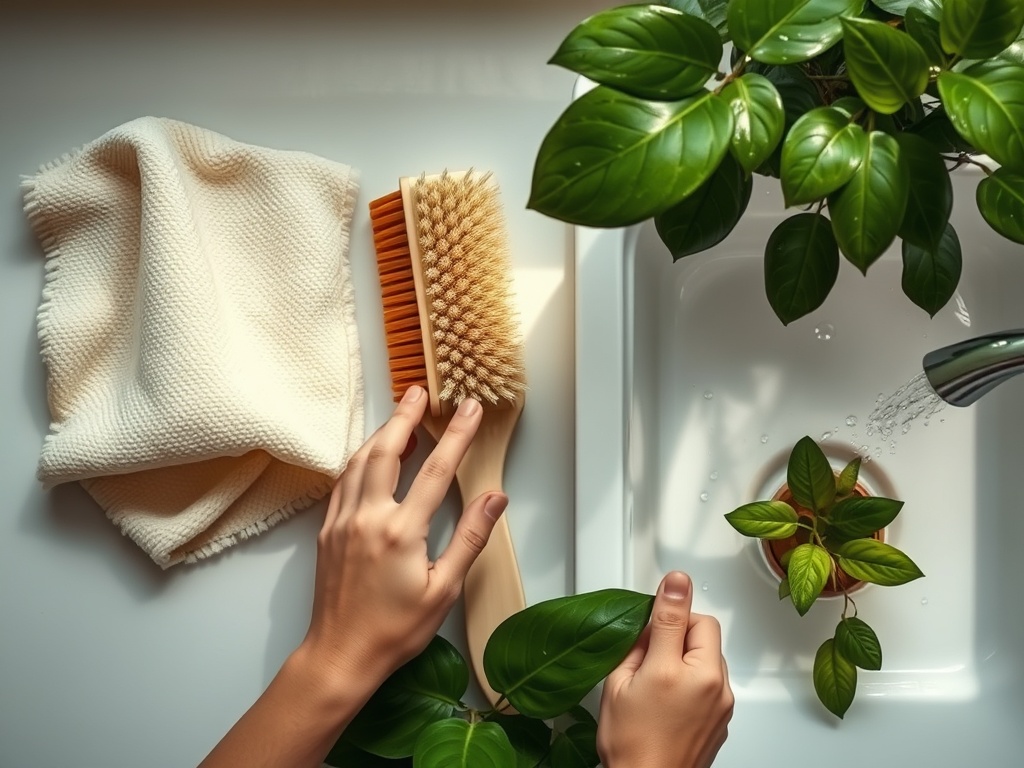
Dampen a soft cloth with lukewarm water and wring it out so it is not dripping. Support the leaf from underneath with one hand and wipe gently from the base toward the tip with the other. Use very light pressure. Repeat on the underside if the leaf is sturdy enough.
Change or rinse the cloth when it becomes dirty. Moving a heavily soiled cloth from plant to plant can spread dust and potentially pests. If you suspect insects, isolate the affected plant and use pest-specific guidance rather than continuing through the collection with the same supplies.
For broad leaves, one careful pass is usually enough. Do not keep rubbing to create a glossy finish. Healthy leaves vary naturally in sheen and texture.
Step 4: Rinse Sturdy Plants With Many Leaves
For a plant that tolerates overhead rinsing, use a gentle lukewarm shower or faucet spray. Keep the water pressure low enough that stems and leaves are not bent or bruised. Tilt the plant slightly so water drains off foliage rather than pooling in crowns or leaf joints.
If you do not want extra water entering the pot, cover the soil surface loosely with a reusable barrier while leaving space around stems. Do not seal the pot tightly for long periods because the soil still needs gas exchange.
After rinsing, allow the plant to drain thoroughly. Empty saucers or cachepots so roots are not left sitting in water. Return the plant to its normal location after excess moisture has stopped dripping.
Step 5: Brush Fuzzy or Delicate Leaves
Some leaves should not be wiped because rubbing can damage hairs, wax, powdery bloom, or fragile tissue. Use a soft dry brush to lift dust with short, gentle strokes. Support the leaf if possible and work slowly.
Examples can include African violets, some begonias, many succulents, and other plants with textured or coated foliage, but species differ. Do not assume every fuzzy plant follows the same rule. If the plant’s leaves are sensitive to water, keep the cleaning method dry unless reliable species guidance says otherwise.
Compressed air is usually unnecessary and can damage leaves or blow debris into the soil and room. A soft brush gives you more control.
Clean the Pot and Growing Area Too
How Often Should You Clean Leaves?
A quick inspection during watering is often enough to catch issues early. Run a finger lightly over a sturdy leaf. If it leaves a clear line through dust, the plant probably needs cleaning. Fragile leaves can be assessed visually rather than touched repeatedly.
Common Leaf-Cleaning Mistakes
- Using leaf shine automatically: Many plants do not need it, and some products can leave unwanted residue.
- Using cold or hot water: Lukewarm water is a safer default for many tropical houseplants.
- Scrubbing spots aggressively: Spots may be tissue damage or disease, not dirt.
- Rinsing a saturated pot: Extra water can worsen root-zone problems.
- Leaving water in saucers: Drain excess water after cleaning.
- Sharing dirty cloths between infested plants: This can move pests or residue around the collection.
- Cleaning in strong sun: Work in gentler conditions and return the plant after it stops dripping.
If the plant room also includes edible seedlings or a nearby food-growing setup, keep ornamental plant cleaning separate from any vegetable garden problem-solving routine so tools and pest issues are not mixed casually.
Keep Leaves Clean Without Overhandling
Clean Gently and Inspect Closely
Houseplant leaf cleaning works best as a light maintenance task, not a polishing ritual. Use water and soft tools, match the method to the leaf surface, support delicate foliage, and inspect for pests while you work. A clean leaf should still look like that plant’s natural leaf, not like it has been coated to create artificial shine. If you also grow food outdoors, keep this routine separate from vegetable garden troubleshooting.
This houseplant-care content is for informational and educational purposes only. Plant species differ in moisture tolerance, leaf coatings, pest susceptibility, and toxicity. Use species-specific horticultural guidance when needed.[/