The best area rug size is the one that connects the main furniture group without crowding the walls or leaving key pieces visually stranded. Standard rug dimensions are useful starting points, but furniture placement, walking paths, door clearance, and room proportions should drive the final choice.
TL;DR: Measure the furniture zone first, not just the room. In living rooms, aim to place at least the front legs of major seating on the rug. In dining rooms, allow room for chairs to stay on the rug when pulled back. In bedrooms, size the rug around the bed footprint and the amount of soft landing you want at the sides and foot.
Start With the Furniture Footprint
A rug works best when it defines a functional zone. That is why a room-wide measurement alone can be misleading. A 12-by-15-foot living room might contain a compact seating group in one half, while an open-plan room of the same size may need a larger rug to visually connect a sofa, chairs, and coffee table.
Interior designers commonly treat rug sizing as a proportion and placement decision rather than a fixed formula. Architectural Digest’s rug-size guidance similarly emphasizes furniture relationships, breathing room around the rug, and avoiding undersized pieces that make a furniture group feel disconnected.
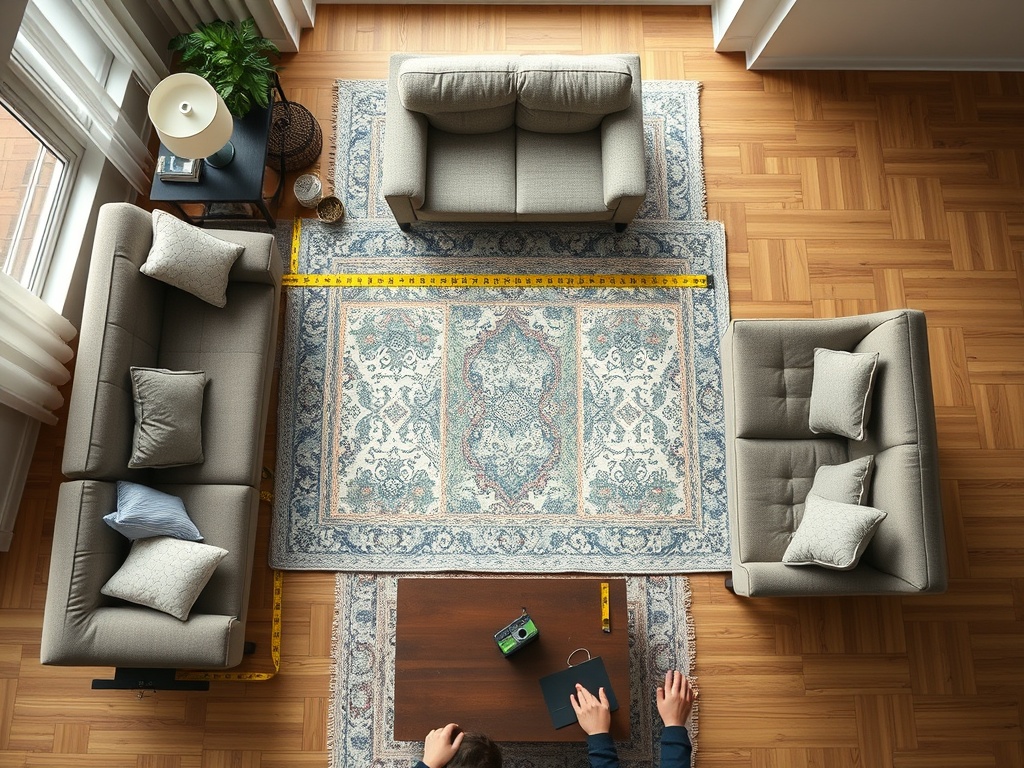
Before shopping, mark the intended rug perimeter with painter’s tape. Walk around the room, open nearby doors, pull chairs out, and check that the taped shape supports how the space is actually used. This simple mock-up is often more reliable than choosing a rug from a size chart alone.
If your room layout is still unsettled, it can help to solve the broader furniture plan before committing to a rug. The same principle applies when working on sound-softening a small apartment, because furniture location and textile coverage influence both visual balance and reflected sound.
Common Rug Sizes and Where They Usually Fit
The dimensions below are common retail sizes, not universal design rules. Use them as shopping references after measuring your actual furniture arrangement.
| Room or zone | Common starting sizes | Practical placement cue |
|---|---|---|
| Small living room | 5×8 or 6×9 ft | Coffee table centered; front sofa and chair legs may sit on the rug |
| Medium living room | 8×10 ft | Often large enough to connect the main seating group |
| Large living room | 9×12 or 10×14 ft | Can place most or all seating legs on the rug |
| Four-seat dining area | 6×9 or 8×10 ft | Confirm chairs remain on the rug when pulled back |
| Six- to eight-seat dining area | 8×10 or 9×12 ft | Measure table plus chair movement before buying |
| Queen bedroom | 6×9 or 8×10 ft | Position under most of the bed with side and foot exposure |
| King bedroom | 8×10 or 9×12 ft | Allow useful coverage at both sides and the foot |
| Entry or hallway | Runner or small area rug | Keep edges clear of door swings and trip-prone transitions |
Living Room: Anchor the Seating Group
For most living rooms, the rug should feel connected to the sofa and chairs rather than floating under the coffee table. A smaller room can work with the front legs of the sofa and accent chairs on the rug. A larger room often looks more cohesive when all main seating pieces sit fully on it.
When a sofa is against a wall, there is little visual benefit in extending a large amount of rug behind it. Instead, prioritize enough rug in front of the sofa to reach the coffee table and connect nearby chairs. In a floating arrangement, a larger rug usually creates a stronger island of furniture and keeps walkways from cutting awkwardly across rug edges.
Do not overlook floor registers, thresholds, fireplace hearths, or floor outlets. A rug should not obstruct systems that need airflow or access. If you are planning other room layers at the same time, drawer and storage organization ideas can help keep the visible floor plan calmer by reducing loose household items.
Dining Room: Measure for Moving Chairs
A dining rug has a functional job: it should support both the table and the chairs during normal use. The easiest method is to pull each chair back to the distance you would use when sitting down or standing up, then measure the full occupied footprint. Add a little tolerance so chair legs do not repeatedly catch a rug edge.
Design sources often suggest generous extension beyond the tabletop, but the exact amount is a preference tied to chair depth and room size. Treat any fixed dimension as a guideline, not a building requirement. A low-pile or flatweave surface can also make chair movement easier than a very deep pile.
Bedroom: Plan the Soft Landing
In a bedroom, the useful question is where you want your feet to land when getting in and out of bed. A rug placed under roughly the lower two-thirds of the bed can create generous side and foot coverage without disappearing under nightstands. A larger rug can run under the entire bed and nightstands when the room has enough width.
For smaller bedrooms, two runners on the bed sides can provide comfort with less cost and less floor coverage. That approach is also easier when heating vents, closet doors, or narrow circulation paths make a large rug difficult to place.
Before buying, account for bed frames with very low clearance. Thick pile may catch under storage drawers, platform edges, or rolling under-bed bins.
Entryways, Hallways, and Home Offices
Small rugs and runners need extra attention because their edges often sit in active walking zones. In an entry, check the full door swing and leave enough clearance that the door does not drag across the pile. Use an appropriate nonslip rug pad when the floor finish and rug construction call for one.
If the room includes automated lamps or accent fixtures, coordinate the textile plan with efficient outdoor and smart-lighting routines so the visual design and practical controls feel intentional rather than added separately.
Common Sizing Mistakes
- Buying before taping the footprint: A rug can look large online and still feel small under real furniture.
- Centering on the room instead of the furniture: The rug should support the functional zone first.
- Ignoring chair movement: Dining chairs need usable travel space, not just enough rug when tucked in.
- Covering door clearance: Thick pile near a swinging door can become annoying or unsafe.
- Choosing pile only for softness: High pile can complicate chair movement, vacuuming, and under-bed storage.
- Using a rug pad as an afterthought: The pad affects grip, cushioning, total thickness, and sometimes floor-finish compatibility.
Keep the Fit Working Over Time
Vacuuming and rotating a rug periodically can help distribute wear, especially in rooms where traffic follows the same path every day. Follow the rug manufacturer’s care instructions because fiber type, backing, dye, and construction affect which cleaning methods are appropriate. Recheck corners and edges after moving furniture or deep cleaning, since a previously flat rug can shift or curl.
If the rug begins creeping into a walkway, treat that as a placement problem rather than simply pushing it back repeatedly. A better pad, a slightly different furniture position, or a different rug dimension may solve the issue more reliably.
Choose the Rug by Furniture First
The strongest sizing decision starts with the furniture group, then checks walking space, doors, vents, and maintenance needs. Standard sizes are useful shopping shortcuts, but the most successful rug is the one that supports the room’s real layout and daily movement. Tape the footprint, test the arrangement, and buy only after the proportions feel right in the space.
This home-design content is for informational and educational purposes only. Rug placement may need to be adjusted for accessibility, flooring conditions, manufacturer instructions, or specific household safety needs.[/